
The Cross Classic Century
The machine that slows thought down
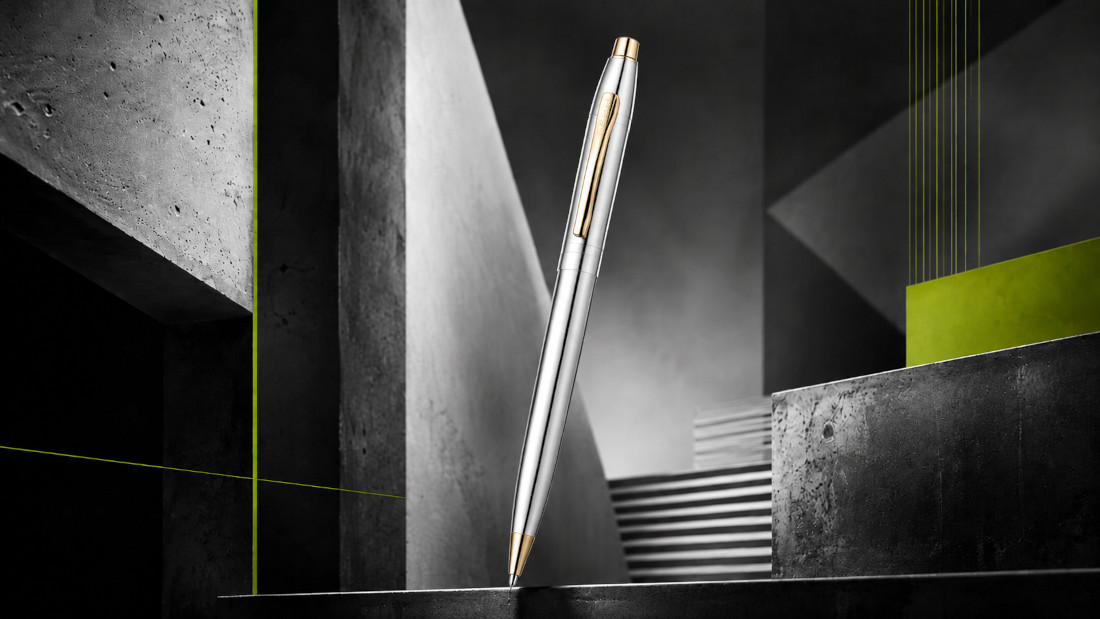
A Cross Classic Century does not generate, suggest, summarize, autocomplete, or optimize. It waits.
That may be its most radical feature now.
In a culture where language increasingly arrives pre-assembled — predicted by keyboards, corrected by software, expanded by models — the pen remains a small machine that refuses to move faster than the hand. It does not remove friction from thought. It preserves it.
The Classic Century is not an expressive object in the loud sense. It is thin, precise, almost severe. Its body is not designed to disappear entirely, but it also does not perform personality. It has the restraint of an office, a contract, a signature, a decision. It belongs to a world where writing still implied physical commitment.
That is why it feels newly interesting.
The digital interface treats language as something endlessly editable. A sentence can be moved, regenerated, expanded, deleted, softened, optimized, translated, and rephrased before it has ever really existed. The screen makes writing provisional. AI intensifies that condition. Words become abundant, fluid, reversible. They arrive quickly and can be replaced just as quickly.
The pen changes the tempo.
To write with a pen is to accept sequence. One mark follows another. There is no invisible buffer, no instant rearrangement, no model waiting to complete the thought. The hand must participate. The wrist, the pressure, the hesitation, the interruption, the mistake: all of it stays closer to the act.
This does not make handwriting morally superior. It does not make the pen more “authentic” than the keyboard. That argument is too easy, and mostly useless. The point is not nostalgia. The point is architecture.
Every tool shapes the conditions under which thought appears.
The prompt box encourages delegation. The keyboard encourages velocity. The touchscreen encourages reaction. The pen encourages commitment at a human speed.
That speed matters.
Not because slower is always better, but because certain forms of thinking require resistance. A note written by hand has a different density from a note typed into a window. It is not just information. It is a trace of attention. The line carries pressure. The page holds order. The blank space remains visible. The body leaves evidence.
This is what the Cross pen still understands. It is a machine, but not an intelligent one. It does not interpret intent. It does not anticipate the next word. It does not correct grammar or improve tone. It converts movement into marks. That is all.
And that is enough.
The Classic Century’s elegance comes from this narrow contract. It is a tool with limits so clear they become almost luxurious. It will not think for you. It will not rescue you from vagueness. It will not make the sentence better than the thought behind it. It asks for the one thing intelligent systems are making easier to avoid: presence.
There is a reason signatures still matter. A signature is not the most efficient form of identity. It is slow, inconsistent, physical, and difficult to standardize. But it carries an old idea that has not entirely disappeared: that a human hand can still stand behind a decision.
The pen belongs to that idea.
In the age of AI-generated text, the Cross Classic Century becomes more than a writing instrument. It becomes a reminder that not every interface should accelerate us. Some objects are valuable because they interrupt automation’s preferred rhythm. They return thought to the body before it becomes output.
The machine does not speak.
It waits for the hand.
The Ojbect Archive