
The Formula 1 Car
The machine that refuses to be finished
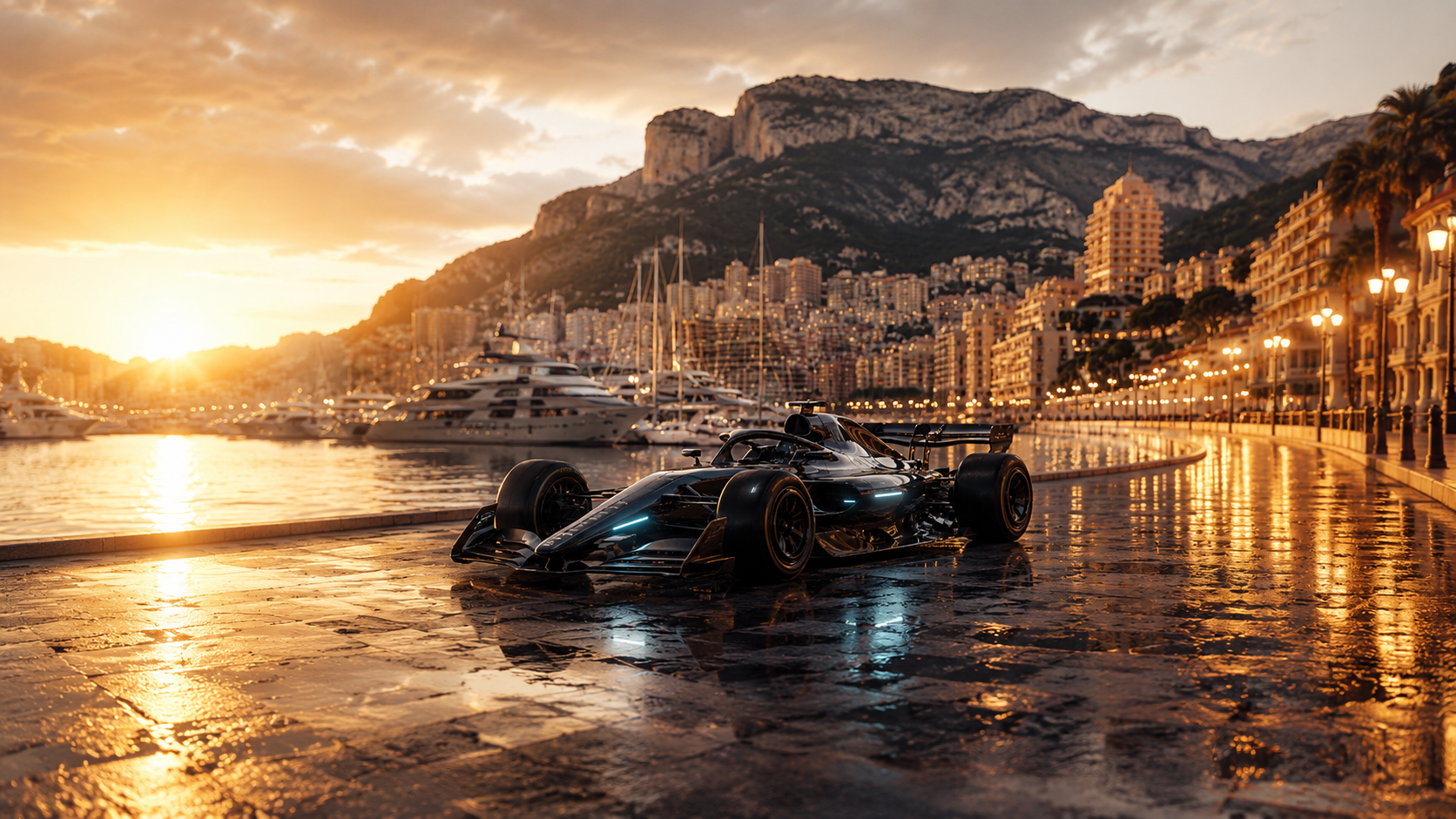
The Formula 1 car is not a car in the ordinary sense. It does not exist to take anyone anywhere. It does not solve a practical problem. It is too expensive, too delicate, too loud, too specialized, too absurdly hostile to comfort to belong to the normal history of transportation.
And yet, somehow, it may be the purest machine the automobile ever became.
A Formula 1 car is mobility stripped of apology. It is not the family sedan, the commuting vehicle, the delivery van, the weekend convertible, or the electric crossover designed to flatter the conscience of its owner. It is the human dream of movement pushed to the edge of violence and then disciplined by mathematics, carbon fiber, regulation, capital, and fear.
It is an object designed around one forbidden desire: to go faster than the previous definition of fast.
But Formula 1 has a particular genius. It knows that if the machine is left alone, it will become too good. The engineers will solve it. The dominant teams will settle into advantage. The car will find its optimal form, and the spectacle will begin to harden into repetition.
So the sport does something almost philosophical.
It changes the rules.
The Formula 1 car is a machine that is periodically made strange to itself. Every few years, the object is destabilized. Aerodynamics are rewritten. Power units are rebalanced. Fuel rules shift. Weight changes. Energy recovery becomes more important. Wings move differently. What was once mastery becomes memory.
The teams are forced back into uncertainty.
This is why the Formula 1 car belongs in MAN/MACHINE. It is not merely an advanced machine. It is a machine placed inside a system that refuses technological comfort. The rulebook becomes part of the engine. Governance becomes part of speed. Constraint becomes the source of innovation.
The new 2026 era makes this visible again. Formula 1 is moving toward lighter cars, active aerodynamics, more electrical power, and advanced sustainable fuels. The FIA describes the 2026 shift as one built around active aero, increased electrical energy, and sustainable fuel requirements. Formula 1’s own technical explainers frame the new power units around a much stronger hybrid balance than before.
That matters because the Formula 1 car does not adopt electricity the way a consumer product adopts a virtue. It absorbs electricity as a weapon.
Electricity is not there to soften the machine. It is there to recover, deploy, boost, manage, attack. The battery is not a moral accessory. It is performance architecture. In Formula 1, even sustainability must pass through the brutal filter of lap time.
This is why the car continues to matter beyond the circuit. Formula 1 has long functioned as a laboratory under pressure, where hybrid systems, aerodynamics, materials, simulation, safety thinking, and manufacturing knowledge are pushed in extreme conditions before filtering into broader automotive culture. Formula 1 itself describes this transfer from racing innovation into supercars and, gradually, more ordinary road cars; DHL similarly calls F1 a “laboratory on wheels” for technology exchange between racing and road-car engineering.
The road car wants reliability. The Formula 1 car wants revelation.
That is the bargain.
And yet the machine is not only engineering. It is glamour. Monaco proves this better than any wind tunnel. There, the car becomes almost irrational: too fast for the street, too expensive for the city, too beautiful for utility, too dangerous for politeness. It passes yachts, balconies, casinos, camera lenses, old money, new money, watches, champagne, security barriers, and the strange international theatre of people who want to be seen near power.
Monaco is not the most logical place for a modern racing car.
That is exactly why it works.
The Formula 1 car needs Monaco because the machine is also an object of desire. It is the fantasy that technology can still be elegant while being ruthless. It is not only speed measured in kilometers per hour. It is speed as jewelry. Speed as status. Speed as choreography. Speed as a body in a fireproof suit stepping into a carbon-fiber animal while the world watches.
But the most important part of the object may be the person inside it.
The driver is not a passenger. The driver is not even simply an operator. In a Formula 1 car, the human body becomes a component under load.
The neck must resist forces that would make ordinary concentration impossible. The core must stabilize the body through braking and cornering. The hands must process vibration, steering input, radio information, strategy, temperature, tire degradation, energy deployment, and proximity to catastrophe. Formula 1’s own training material describes the extreme neck strain imposed by high-speed cornering and braking, while sports-science discussions of racing physiology emphasize the unusual demands placed on drivers by G-forces, heat, endurance, and cognitive load.
This is not man versus machine.
It is man inserted into machine.
The driver becomes the nervous system. The car becomes the exoskeleton. The team becomes the distributed brain. The data stream becomes memory. The pit wall becomes judgment. The regulations become destiny. The audience becomes pressure.
A Formula 1 car is therefore not one object, but a temporary agreement among many systems: combustion, electricity, airflow, software, tire chemistry, muscle, reflex, money, weather, politics, branding, fear, and beauty.
It is the pinnacle of human mobility because it does not pretend mobility is innocent.
The history of the automobile is often told as a history of freedom: the open road, the private journey, the democratic promise of movement. Formula 1 tells a darker, sharper version. Movement is not freedom. Movement is power. Movement is hierarchy. Movement is control over matter, time, risk, and attention.
The Formula 1 car is what happens when the automobile stops pretending to be useful and admits what it always wanted to become.
A machine of escape velocity.
A machine that turns fuel into myth.
A machine that has to be challenged again and again because comfort is death.
That is why the Formula 1 car is never finished. Not because engineering fails, but because the sport understands something deeper about machines and humans alike: once the challenge disappears, excellence decays into administration.
So the rules change.
The wings move.
The engines transform.
Electricity enters the bloodstream.
The driver trains the body to survive the future.
And the machine returns to the grid, unfinished again, waiting for the lights.