
WiiM Mini: The Little Streamer That Makes Old Audio New Again
A small, inexpensive machine that turns almost any serious stereo into a modern networked system.
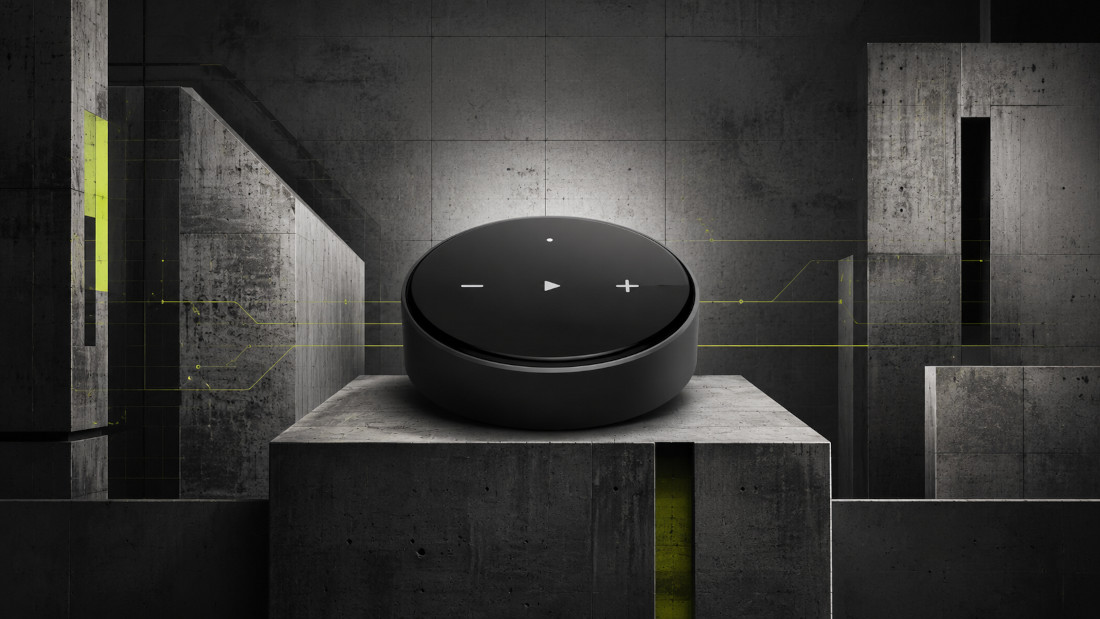
The WiiM Mini does not look like a revolution. It looks like a puck. Small, round, black, almost too simple to be taken seriously by the old rituals of hi-fi.
That may be exactly why it matters.
For decades, good audio lived behind gates. You needed the right source, the right transport, the right cables, the right formats, the right knowledge, and often the right amount of money. Streaming changed the music side of that equation, but not always the system side. Many beautiful amplifiers, receivers, DACs, and speakers remained outside the networked world, perfectly capable of sounding good but disconnected from the way people now listen.
The WiiM Mini enters that gap.
It is a tiny wireless music streamer designed to connect modern streaming services to an existing stereo system. It supports AirPlay 2, Spotify Connect, TIDAL Connect, Amazon Music casting, Alexa integration, Bluetooth, Wi-Fi, and optical digital output, with support for up to 24-bit / 192 kHz audio output. In other words, it brings a large part of the contemporary music interface into a very small object.
The important part is not that it is perfect. The important part is that it is enough.
For many systems, the smartest way to use it is not as the final sound-making device, but as a bridge. Connected digitally through optical output into a good DAC, amplifier, or receiver, the WiiM Mini becomes a transport: a small network brain feeding an older audio body. This is where the product becomes interesting. It does not ask the listener to replace the system. It lets the system re-enter the present.
That is a different kind of innovation.
Most consumer technology tries to make the past obsolete. The WiiM Mini does something more elegant: it makes the past compatible. A receiver from another era, a pair of passive speakers, a modest DAC, a serious integrated amplifier, or a secondary room system can suddenly become part of the streaming age. The old machine does not disappear. It receives a new layer.
This is why the WiiM Mini feels larger than its size. It is not trying to be the center of the room. It is trying to remove the need for a center. The phone becomes the interface. The old stereo becomes the body. The small streamer becomes the translator.
There is also a lesson in price.
A product like this weakens the assumption that digital convenience must be expensive, proprietary, or visually dominant. The WiiM Mini has often been discussed as a roughly $99-class product in the audio press, which places it in a very different category from many traditional network streamers. At that level, the question changes from “Can I justify adding streaming to this system?” to “Why is this system not already connected?”
That question has consequences.
When a capability becomes cheap enough, it stops being a luxury feature and becomes infrastructure. Wi-Fi audio, multiroom playback, app-based control, streaming-service integration, and high-resolution digital output no longer need to belong only to expensive components. They can become a small add-on. A black puck. A quiet interface between eras.
The WiiM Mini also belongs to a larger pattern in technology: the shrinking of the gateway. The device that once needed a full chassis becomes a small module. The expensive box becomes a commodity layer. The visible interface moves elsewhere. The value shifts from mass to connection.
That does not mean every cheap object is good. Cheap can mean disposable, noisy, badly supported, or compromised. But the interesting cheap object is different. It does one narrow job well enough to change the economics around it.
The WiiM Mini is that kind of object.
It does not promise the romance of vinyl, the authority of a heavy CD transport, or the industrial drama of a high-end streamer. It does not need to. Its role is smaller and more precise: to let music move from the network into the system with minimal ceremony.
In that sense, it is not an anti-audiophile device. It may be one of the most audiophile ideas in the current market: spend less on the box that moves bits, and more on the parts that actually turn signal into music.
The best objects often disappear into the system they improve. The WiiM Mini is small enough to vanish, cheap enough to spread, and useful enough to make older equipment feel contemporary again.
It is not the future of audio because it looks futuristic.
It is the future of audio because it makes the existing world work better.
The Ojbect Archive