
Oyster Perpetual 34: The Rolex Before the Rolex
The watch remained. Its meaning changed.
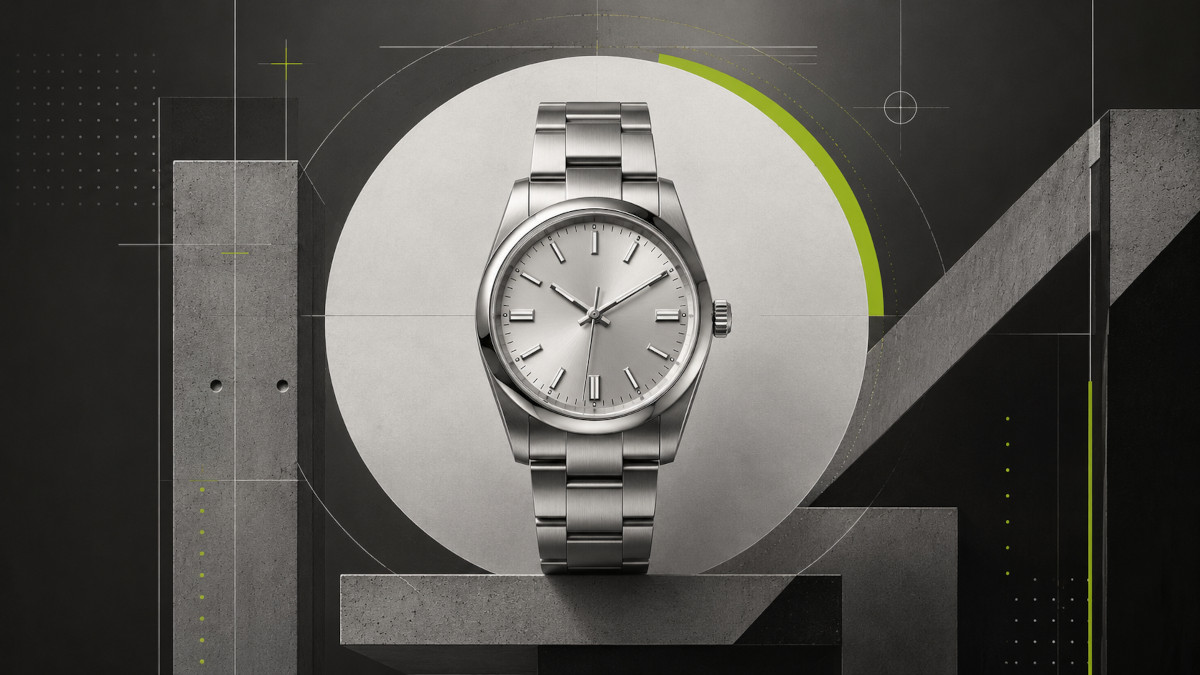
Before Rolex became a global symbol of arrival, it made watches designed simply to remain useful.
The Oyster Perpetuals of the 1970s and 1980s were compact, automatic and discreet. Their 34-millimetre cases did not dominate the wrist. There was no rotating bezel, oversized crown or complication demanding attention. The watch told the time, resisted water and accompanied its owner through work, travel and ordinary life.
It was not an entry-level version of something more important. It was the essential Rolex proposition: a sealed steel case, a self-winding movement and the promise that the object could keep going.
The current Oyster Perpetual 34 preserves that formula almost intact. A smooth steel case, three hands, baton markers, an automatic movement and no date. Mechanically, it is thoroughly modern. Visually, it still belongs to an era when luxury could be quiet and technical achievement did not need to advertise itself.
Its dimensions are now part of the statement. In a market shaped by larger watches and instant recognition, 34 millimetres feels almost radical. The watch does not project power across the room. It rewards proximity.
What has changed is everything around it.
Today, a Rolex is rarely read as only a watch. It carries the weight of scarcity, status, investment and recognition. Even its simplest model enters a cultural system far larger than its mechanical function.
That is what makes the Oyster Perpetual 34 interesting. It is not a nostalgic reproduction. It is an object that survived its own transformation in meaning.
The machine remained restrained.
The symbol became enormous.