
Technics SL-1200
The turntable that became an instrument.
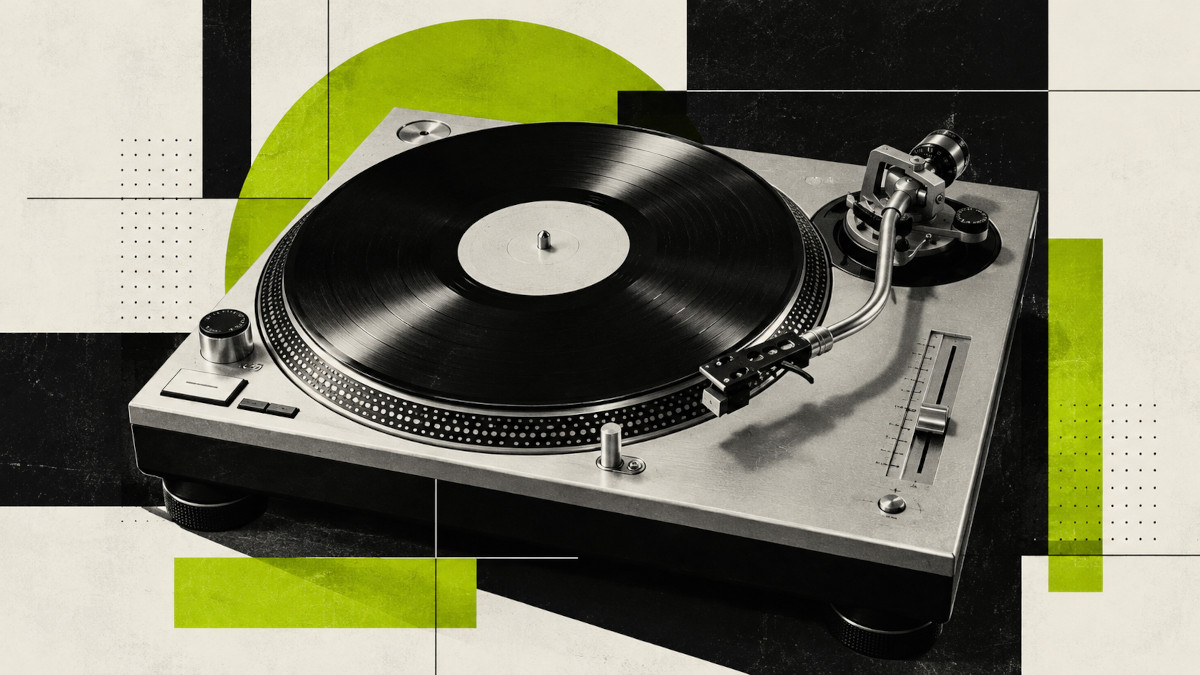
Some machines are remembered for what they were designed to do. Others become important for what people discover they can do with them.
The Technics SL-1200 belongs to the second category.
Introduced in Japan in 1972, it was conceived as a high-fidelity turntable: a precision instrument intended to reproduce recorded music with stability, accuracy, and reliability.
It succeeded at that task so convincingly that it became something much larger.
Over the following decades, the SL-1200 would help shape DJ culture, influence the development of hip-hop and electronic music, and establish itself as one of the most recognizable pieces of audio equipment ever produced.
More than fifty years after its introduction, its essential design remains remarkably familiar.
That longevity tells us something important about engineering.
Precision You Can Feel
The SL-1200's defining characteristic was its direct-drive motor.
Unlike belt-driven turntables, which transfer motion from a motor to the platter through a flexible belt, the Technics system drives the platter directly.
The result is stable rotation, rapid startup, and precise speed control.
But specifications alone don't explain the machine's appeal.
There is something reassuring about the physical presence of an SL-1200. Its substantial construction, carefully damped chassis, solid platter, and deliberate controls communicate confidence.
Nothing feels accidental.
The tonearm moves with precision. The platter responds immediately. The controls are located where they make sense.
It is a machine that invites interaction without demanding attention.
And that quality would prove particularly important when musicians began using it in ways its original designers had not fully anticipated.
From Reproduction to Creation
A turntable was originally intended to perform a straightforward task: play a recording as faithfully as possible.
But DJs discovered that the same mechanical qualities that made the SL-1200 an excellent playback device also made it remarkably useful for performance.
Its powerful direct-drive motor, stable rotation, and adjustable speed allowed DJs to manipulate the relationship between records with increasing control.
They could match tempos, extend rhythmic passages, move between recordings, and eventually use the records themselves as expressive instruments.
An important distinction belongs in this history: early hip-hop pioneer DJ Kool Herc famously used the Technics SL-1100, a predecessor of the SL-1200, at his Bronx parties. The SL-1200 and its later versions subsequently became central to the expanding culture of DJ performance.
The 1979 SL-1200MK2 brought further refinements, including quartz-controlled speed stability and a more performance-oriented pitch adjustment system.
As hip-hop, disco, house, and techno evolved, the SL-1200 series became part of the equipment through which those cultures expressed themselves.
The record player had acquired a new purpose.
It was no longer simply reproducing music.
It was helping create it.
When Engineering Becomes Culture
Perhaps the most remarkable aspect of the SL-1200 is the relationship between its original engineering and its unexpected cultural significance.
Technics did not need to invent a completely new category of machine to enable new forms of creativity.
The company built an exceptionally capable turntable.
Musicians and DJs did the rest.
That interaction between technological capability and human imagination is one of the recurring stories of modern civilization.
A tool designed for one purpose becomes the foundation for something its creators never entirely envisioned.
The SL-1200 also achieved another distinction: it became a common language.
Across countries, clubs, studios, and generations, DJs came to recognize its layout and behavior. A performer could encounter a familiar machine almost anywhere and know what to expect.
Its consistency became part of its value.
One particularly telling detail is that a Technics SL-1200MK2 used by Grandmaster Flash is preserved in the Smithsonian's National Museum of American History.
A machine once sold as consumer audio equipment had become an artifact of cultural history.
A Design That Refused to Become Obsolete
Consumer electronics usually follow a predictable trajectory.
A product appears, becomes popular, is replaced by a more advanced version, and eventually disappears.
The SL-1200 followed a different path.
Its essential design proved so effective that successive generations refined it without abandoning its fundamental character.
Production of the classic series ended in 2010, but Technics eventually brought the family back with new engineering, modern components, and the same underlying design philosophy.
That return was not simply an exercise in nostalgia.
It demonstrated that the original concept still had practical value.
Of course, digital music systems have transformed playback and DJ performance. Software can manipulate audio in ways that would have been unimaginable in 1972.
Yet the SL-1200 continues to offer something distinctive: an immediate physical relationship between a person and recorded sound.
The record rotates. The tonearm travels. The hand makes a small adjustment, and the machine responds.
There is no mystery about the interaction.
And perhaps that clarity is part of what makes the experience so enduring.
The Value of Getting It Right
The SL-1200 is not important merely because it is old, recognizable, or desirable to collectors.
It represents a particularly successful relationship between engineering and human use.
Its designers pursued precision, stability, durability, and control.
Those qualities made it excellent at its intended purpose. They also allowed people to discover entirely new possibilities.
The most interesting machines sometimes achieve their greatest influence long after they leave the factory.
They become part of people's routines, skills, memories, and creative lives.
More than half a century after the first SL-1200 appeared, its unmistakable shape still communicates an idea that remains relevant in an age of rapidly changing technology.
When a machine is designed exceptionally well, time doesn't necessarily make it obsolete. Sometimes, time reveals just how good it was.