Rules
Strange Rules | Palazzo Diedo, Venice
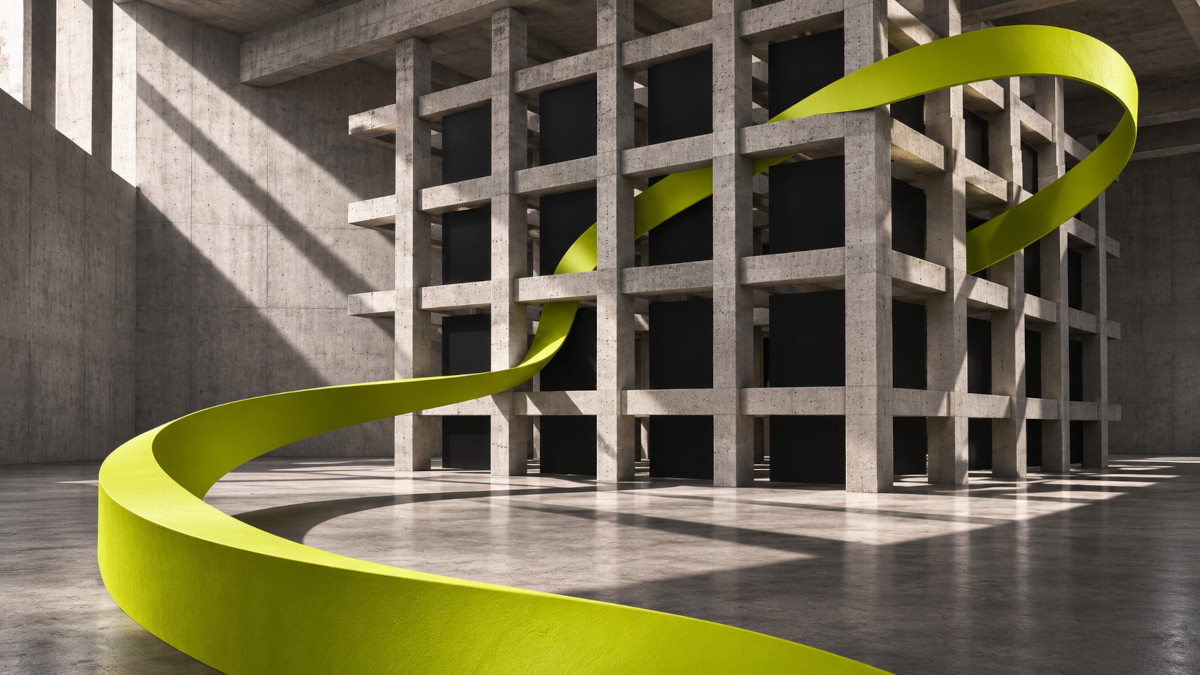
From childhood, we learn one basic rule: rules are there to be followed. First, learn them, understand them, accept them. Then, with talent, curiosity and a little daring, perhaps the time will come to do something different. Art history, however, is full of students who did exactly the opposite. Some ended up writing the syllabus.
In Venice, Strange Rules explores what happens when the rules are no longer just those of art, but also those of the machines that now produce, share and organize our culture. Its focus is on the systems that make our cultural experience possible—and shape it.
Palazzo Diedo, home to Berggruen Arts & Culture, brings together artists, musicians, researchers and scientists through November 22 in a project curated by Mat Dryhurst, Holly Herndon and Hans Ulrich Obrist, with Adriana Rispoli. The exhibition introduces Italy to the concept of Protocol Art, a practice that turns algorithms, artificial intelligence models, platforms and computer systems into material for artistic creation.
The idea may sound abstract, but some of the works make it quite clear.
In Picbreeder, developed by Ken Stanley and collaborators, images evolve through a system of algorithms. Users modify visual features, select variations and allow other participants to keep transforming them. There is no single person who draws and finishes a work: a chain of human decisions and computational processes produces unexpected forms. The generative system is central to the artistic experience.
Trevor Paglen takes the exploration in another direction with Voyager, an installation combining artificial intelligence, biofeedback software and sensors that record the visitor’s pulse. Visitors enter a booth and take part in a hypnosis experience guided by a system that responds to their physiological signals. The body, too, can become information for a machine to interpret.
In Dancer in the Mirror Field, Ayoung Kim works with images, narratives and digital environments to create an experience in which identity, movement and reality become unstable. The work expands the idea of a computer-generated image into a narrative world that shifts and spills beyond the boundaries of the real.
Simon Denny and Venkatesh Rao present Monsters Between Worlds, an installation that brings together computationally generated images, artificial intelligence and references to technology culture. These so-called monsters emerge as figures of a transitional period: platforms, cryptocurrencies and AI coexist with ways of thinking that still belong to the previous world. An age in which technologies advance faster than our ability to understand their consequences.
Also intriguing is Marketplace of Ideas, by Joshua Citarella and New Models, a space filled with objects and materials that evoke the circulation of ideas online. Here, digital culture appears as a marketplace of discourse, images, communities and references that mix, reproduce and constantly change in value.
These works help explain what makes Strange Rules different. It goes beyond showing the images new technologies can produce to explore how those technologies work and who can intervene in them. Programming, instructions, data, collaboration and model training are all part of the work, as well as its visual outcome.
Authorship changes, too. When a creation depends on a system that learns, a community that contributes information or a process that continues to transform, the figure of the artist as sole author is no longer enough to explain what is happening. The exhibition brings artists into dialogue with scientists, programmers and communities.
A book devoted to Protocol Art will emerge from this research. Developed over the course of the exhibition, the publication aims to provide the first comprehensive overview of the practice: bringing together works, artists, precedents and theoretical foundations to establish a field of study whose history has yet to be systematically documented. The artistic challenge now is to decide what kind of world we are building and who writes its rules.
And when it comes to rules, it is worth remembering that art has a long tradition of disobedience. Marcel Duchamp turned a urinal into a work of art; Kazimir Malevich took painting as far as a black square; Jackson Pollock set aside the brush to paint on the floor. Later, Nam June Paik turned television into sculpture, Vera Molnár found a new way to draw through algorithms, and Refik Anadol made data and artificial intelligence the material for monumental immersive installations.
Each, in their own way, shifted the boundaries of what could be considered art. All learned, somehow, that rules exist. But also that they can change. And that a technology seemingly intended to follow instructions can become the territory of a new aesthetic rebellion.
In Venice, Strange Rules invites us to examine them closely. Because to break a rule and make history, you first need to know where it is written. Then, you need the courage—or the nerve—to reprogram it.
STRANGE RULES
Palazzo Diedo – Berggruen Arts & Culture
Venice, Italy
May 4 – November 22, 2026