Now I See the Forest
MoMA, Centre Pompidou, and M+ form a partnership to broaden our view of art
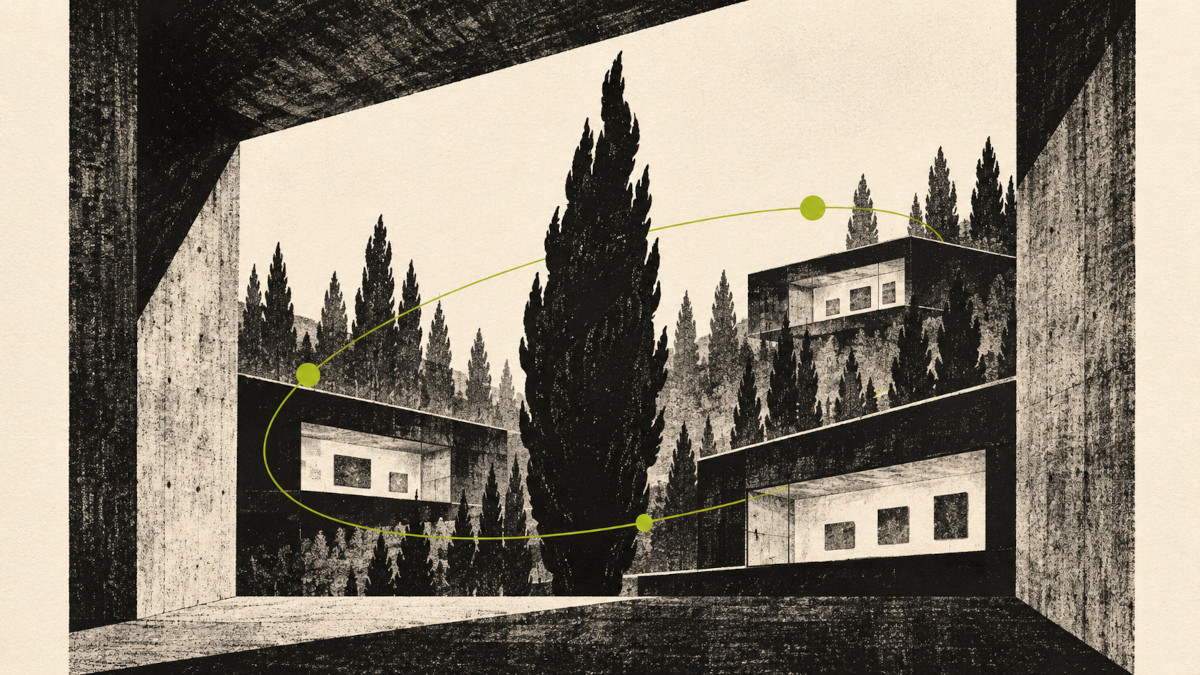
I’m looking at the cypress in Vincent van Gogh’s The Starry Night at MoMA in New York. That dark, almost flame-like tree rises from the foreground and seems to connect the earth with the sky. I could stay there. The cypress draws every eye. Sometimes the thing we see most clearly is only the beginning of a much larger story. “Don’t let the trees keep you from seeing the forest.”
On October 30 in Hong Kong, MoMA, the Centre Pompidou in Paris, and M+ announced a cultural partnership that invites us to do just that. Three institutions from different places and traditions decided to connect their collections, research, and programs so they could do more together than any one museum could do on its own.
Each institution retains its identity. What changes is how they work together. They plan to share artworks through long-term loans, pursue joint curatorial research, organize exhibitions, and bring their archives and expertise into conversation.
Together, they draw around 10 million in-person visitors and 125 million online visitors a year. What interests me more than the size of those audiences is what the museums intend to do with their collections.
For decades, the prestige of major museums was tied to their ability to assemble extraordinary collections. Now three of them are proposing a different way of working. They want to share more, conduct research together, and let artworks circulate for longer periods. A museum’s value can also be measured by the access it provides and the research and dialogue it makes possible.
Three museums in three parts of the world are building a network that can connect collections, expertise, and new forms of creative work. Behind the agreement lies a cultural question with far-reaching consequences. Who writes the history of art, and from where do they tell it?
MoMA and the Centre Pompidou played decisive roles in shaping the accounts of modern and contemporary art that emerged from New York and Paris. M+, which opened in Hong Kong in 2021, brings an Asian perspective on visual culture that encompasses art, design, architecture, and the moving image. Its participation gives people working from other places and traditions a chance to help shape the global story of art.
The partnership already has specific projects in the works. In late 2027, MoMA will display a selection of works from M+ in its galleries under long-term loans. In May of that year, MoMA will also host What is Contemporary?, a symposium on what it means for art to be contemporary and how that definition changes depending on who is making it. In 2028, the Centre Pompidou and M+ will present a joint exhibition on Kandinsky. All three institutions will also collaborate on a contemporary art exhibition drawing on their respective collections and traveling to each museum.
I’m interested in how these museums work with technology and make it part of their artistic programs.
The Centre Pompidou is presenting Computer Worlds in Shanghai, an exhibition that brings together nearly 180 works and documents to trace the history of digital art from the 1950s to artificial intelligence. MoMA has already explored how machines can reinterpret its own holdings. In Unsupervised, Refik Anadol used works spanning more than 200 years from the museum’s collection as material for generating images with AI.
M+ brings another kind of experience. Its monumental LED façade turns the museum itself into a surface for audiovisual work. It presents works made specifically for the museum, digital art projects, video games, and interactive installations. Among these is Refik Anadol’s Winds of Hong Kong. The partnership includes plans to bring such work to the Pompidou’s new facilities in Massy, south of Paris.
These projects share a desire to expand what an artwork can be, what forms it can take, and how it can circulate. I’m curious about how decentralized technologies might reopen questions of ownership and authorship. Technology can also change how the cultural system itself works, from the ways museums connect and share knowledge to who can access their collections.
Collections begin to function like connected archives. A work can remain physically in Paris and still be part of a research project in Hong Kong or New York. Researchers can work together across distances that once made that difficult. I trust that interpretation will remain a human task. Platforms can bring together millions of images. Giving those images context, finding relationships among them, and shaping them into a story still takes a curator. Will it always?
The partnership also has a strategic dimension. For M+, it deepens its relationships with institutions abroad and gives its collection more opportunities to travel. For MoMA and the Pompidou, it brings in other perspectives and gives both museums a reason to revisit the boundaries of the stories they have told. All three gain opportunities to pursue research, reach audiences, and circulate works through a shared network.
What interests me most is the room this network makes for each institution’s perspective. As images circulate around the world, that diversity matters. Access matters, too, and so does where we look from, who interprets what we see, and whose stories are represented.
Will sharing collections make it possible to write a more plural history of art, or will the major institutions continue to decide which artists and cultures enter that story? The answer will depend on the curatorial decisions these museums make together.
I look again at The Starry Night. The cypress is still there. But now I see the forest. And the stars. So many stars waiting to shine with their own light.