The Museum of What’s Missing
UNESCO Virtual Museum of Stolen Cultural Objects
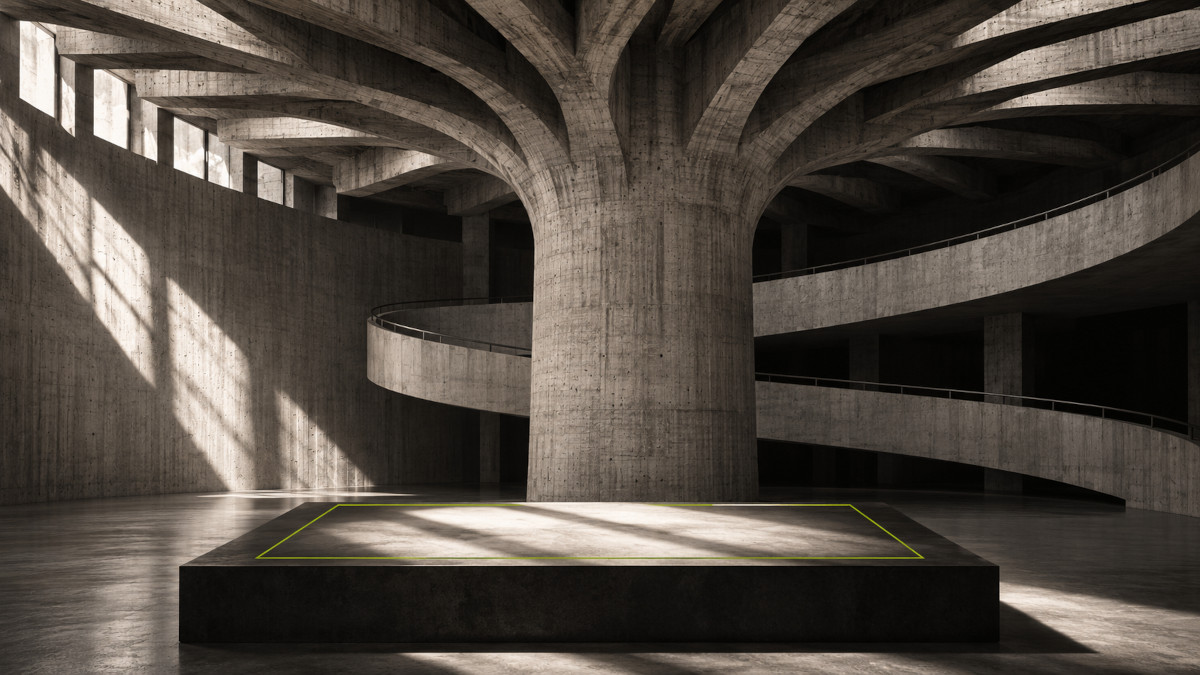
Today I’d like you to join me on a tour of a very unusual museum, where something rather strange happens: the works exist, but we can’t go see them. They aren’t in storage or in a gallery closed to the public. They’re missing. They were stolen, looted, or illegally taken from the places where they belonged. And yet we can encounter them again in a museum with no walls, no display cases, and no originals. Technology has made it possible to exhibit absence.
It’s called the UNESCO Virtual Museum of Stolen Cultural Objects, and it opened in September 2025 during MONDIACULT in Barcelona, UNESCO’s World Conference on Cultural Policies and Sustainable Development. It is the first global platform dedicated to stolen cultural objects. Its premise is straightforward: use artificial intelligence, digitization, and virtual reality to reconstruct missing objects and tell the stories behind their absence.
Under the Baobab
Our first stop is the building itself. It stands in no city and occupies no land. It’s a piece of digital architecture designed by Francis Kéré, an architect from Burkina Faso and winner of the 2022 Pritzker Prize. It was inspired by a baobab, the imposing tree that serves as a gathering place in various African communities. People meet beneath its canopy to talk, share knowledge, and listen to stories. It’s a place where memory passes from one generation to the next. The museum’s spiral structure brings that idea into the digital world. So let’s sit beneath this virtual baobab. Let’s look, listen, and discover the stories it holds: where these objects were taken from, how they disappeared, and what they mean to the communities they belong to.
Listening to Memory
This time, people from different parts of the world have gathered around the tree, drawn together by a memory that needs to be recovered.
The space offers an immersive tour that connects galleries, objects, and stories. We can move through it on a computer, tablet, or phone, or explore it with virtual reality equipment. We’re inside a museum built to be explored, with space to move from one gallery to the next.
Reconstructing Identity
The real innovation lies in the process behind each reconstruction. Participating countries contribute photographs, documents, and visual and historical records of the stolen objects. A generative AI tool uses that information to produce three-dimensional representations. A professional digital studio then reviews and refines the models. The images let us see the volume, proportions, and details of pieces that are no longer available for exhibition.
When the available documentation is insufficient to reconstruct part of an object, the museum shows that part in white and gray. It leaves gaps where the evidence runs out. That choice matters because artificial intelligence can produce remarkably realistic images, and it also needs to be able to tell us what it doesn’t know. A digital reconstruction is an interpretation based on documentary evidence. It cannot stand in for the original or tell us what condition the object is in today. What’s missing shows us the limits of what we know.
Investigating and Connecting the Clues
Each case reveals a different kind of loss and shows the reach of an illicit trade that crosses borders and affects the memory of entire communities. INTERPOL’s figures give us a sense of the scale. Its Stolen Works of Art Database contains nearly 57,000 objects, with descriptions and images drawn from certified police information supplied by different countries. That figure gives us a glimpse of the problem. The total is higher, since many thefts and acts of looting are never recorded internationally.
Finding and Recovering Their Stories
Let’s enter another gallery, Return and Restitution. Here the tour changes direction. Alongside the objects that were taken, we see what has made it back. Each documented restitution adds a different story and shows how technology can help track these efforts. The platform is designed to grow as countries contribute information about more objects and as cases of recovery and return are recorded.
Bringing Them Home
I’m especially interested in this relationship between AI and cultural responsibility. Here, the immersive experience puts technology to work on a real problem: the illicit trafficking of cultural objects, the loss of heritage, and the right of communities to preserve their connection to their own history.
A digital image cannot return a piece to its temple, museum, or home territory. But it can keep the object visible, keep its story in circulation, and help ensure that disappearance doesn’t turn into oblivion. In this museum, AI works with information from the past to create an experience in the present. It tries to let us see again a heritage that was taken from us.
My favorite prompt? Listen, reconstruct, investigate, reconnect, restore. I’ll take them all. And in the process, the role of a museum changes too. Alongside conserving and exhibiting what it holds, it can help recover what belongs elsewhere.
You can return to this museum whenever you like. It’s open 24 hours a day, every day of the year. I hope that every time you come back, you find fewer objects, and that the restitution gallery is the only one that grows.
The best future for this museum is to end up with an empty collection.
Enjoy your visit under the baobab!