The Exception Is the System
AI can handle the ordinary. The real design problem begins when reality refuses to follow the process.
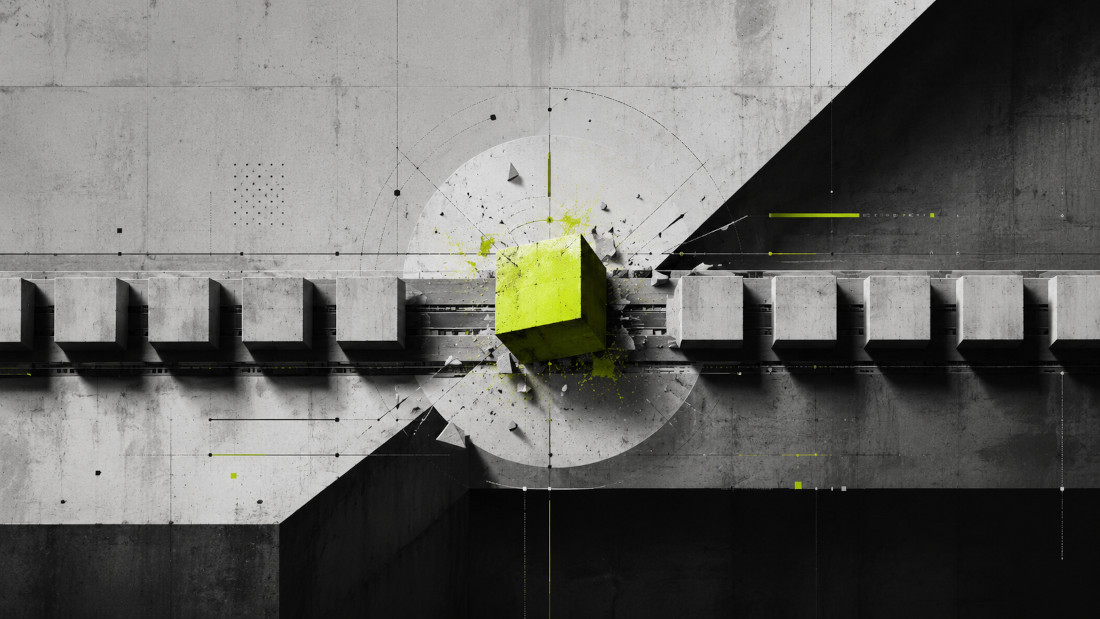
Every organization is built around procedures, but much of its intelligence lives outside them.
It lives in the employee who knows when a rule should be ignored, the technician who recognizes that a normal reading is hiding an abnormal condition, the manager who senses that a customer’s request cannot be handled through the usual channel.
These moments are called exceptions, as though they were peripheral. In practice, they often reveal how the organization actually works.
AI is becoming increasingly capable of handling the regular case. It can classify, route, summarize, compare and execute within defined limits. As more routine activity becomes automated, human work will concentrate around situations that do not fit: incomplete information, conflicting objectives, unusual customers, ambiguous responsibility and events that no workflow anticipated.
This creates a paradox. The more efficiently a company automates the standard process, the more important its ability to understand and manage exceptions becomes.
Most systems are designed to reduce variation. They seek consistency, predictability and control. Yet reality continues to produce cases that resist classification. A customer behaves differently. A supplier fails in an unexpected way. Two reliable sources contradict each other. A process reaches the correct result for the wrong reason.
In these situations, the exception is usually treated as noise. Someone resolves it manually, the system records the outcome, and the organization continues as before.
That may be a mistake.
Repeated exceptions are signals. They may indicate that the process is obsolete, that the categories are poorly designed, that responsibility is unclear, or that a new kind of demand is emerging. What appears to be an operational inconvenience may be evidence that the organization has outgrown its own model.
This matters because AI systems learn from the structures we give them. If those structures are too rigid, the system may become highly efficient at reproducing the limitations of the process.
A workflow can be optimized while the underlying logic remains wrong.
The real challenge is therefore not only to decide how an AI system should act when everything is clear. It is to design what happens when clarity disappears.
When should the system stop? When should it ask for more information? When should it escalate? Who is responsible for interpreting the case? How is the resolution recorded? Does the exception remain isolated, or does it change the process itself?
These questions define the intelligence of the organization more than the smooth execution of routine tasks.
A mature system does not merely recover from exceptions. It learns from them.
It looks for patterns across cases. It identifies where the same ambiguity returns. It distinguishes between rare accidents and recurring evidence that the process needs to be redesigned.
In this sense, exceptions are not located outside the system. They are one of its most important feedback mechanisms.
As AI takes over more of the ordinary, the boundary between process and exception will become increasingly visible. Humans will spend less time executing standard sequences and more time working in the areas where the sequence breaks down.
That does not make human work less important. It makes it more concentrated.
The engineer of the AI era will need to design both the path and the exit from the path. The organization will need to know how to operate when the model is uncertain, when the data is incomplete and when the situation has no precedent.
The future of intelligent systems will depend less on how perfectly they follow the process than on how well the organization learns from everything that escapes it.
The exception is not the failure of the system.
It is where the system reveals what it still does not understand.