The Time Machines Give Back
AI can shorten a task without making the working day lighter. What happens to the saved time is a decision companies still have to make.
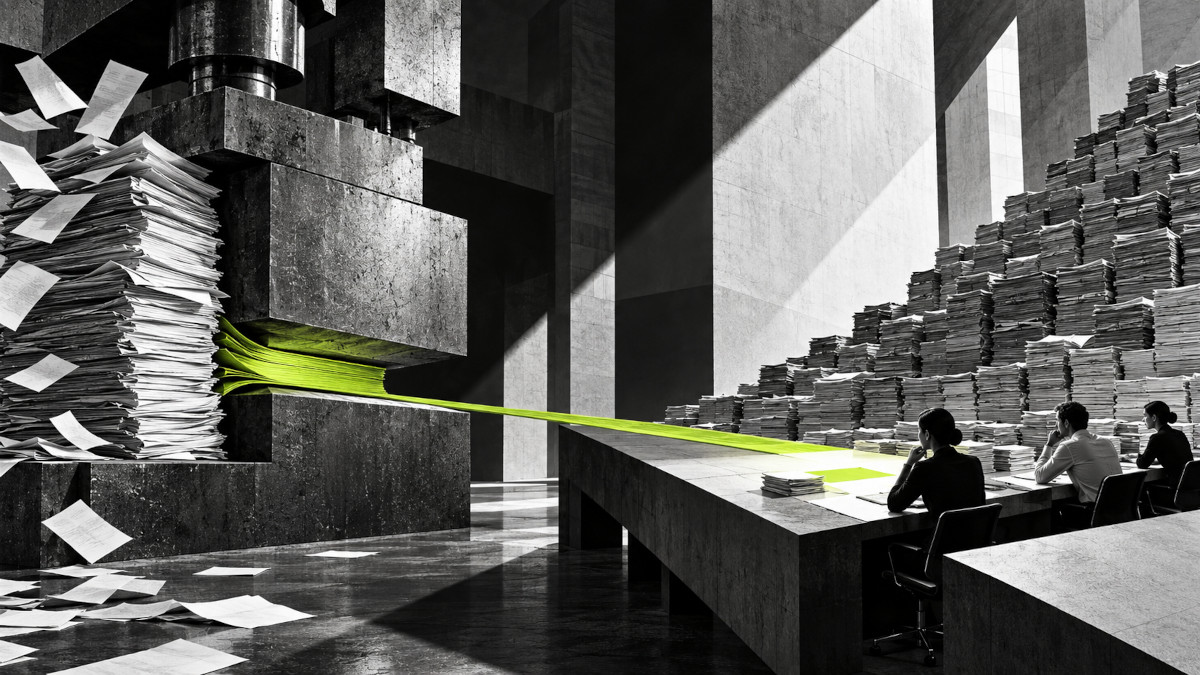
A document can be summarized before its reader finishes a coffee. A first draft can appear in seconds. A customer’s question can receive a prepared answer almost immediately.
These are useful gains. They also create a question that rarely appears in a demonstration: where does the saved time go?
The person who once wrote one report may be asked to produce three. The person who answered customers all morning may spend the afternoon reviewing machine-generated replies. A meeting can be called with less warning because its background material is now easy to produce.
The work becomes faster. The day does not necessarily become lighter.
Speed can change how judgment is perceived. When a draft takes seconds to generate, the time spent checking it may look excessive. A colleague may wonder why the answer has not been sent. A manager may wonder why the task remains open.
Yet checking the source, noticing what is absent, considering the recipient, and deciding whether the result is good enough to stand behind are parts of the work. Generating the words was only the first step.
Companies can ask a second AI system to review the first system’s output. That can catch contradictions and improve a sentence. It can also repeat the same mistaken assumption in more convincing language. An automated second opinion does not always provide an independent check.
The promise to remove routine work deserves attention for another reason. Some routine steps added little value. Others gave employees a chance to notice the unusual number in a report, the customer whose request did not fit a category, or the clause that needed a slower reading.
Those steps need not be preserved merely because they are familiar. But if they disappear, someone must decide where those observations will happen instead.
The same is true of the hours AI gives back. They can become more deadlines and higher output targets. They can also become time to investigate a difficult case, teach a colleague, improve a process, or speak to a customer. Both paths may show an initial productivity gain. Their longer-term results will differ.
Machines can shorten the interval between a request and an answer. They do not decide whether a workload is fair, whether a result deserves trust, or what a company should do with Tuesday afternoon.
Those choices determine whether faster work becomes better work.