Frankenstein and AI Agents: The Same Question, Two Hundred Years Later
On responsibility, autonomy, and what literature understood before engineering
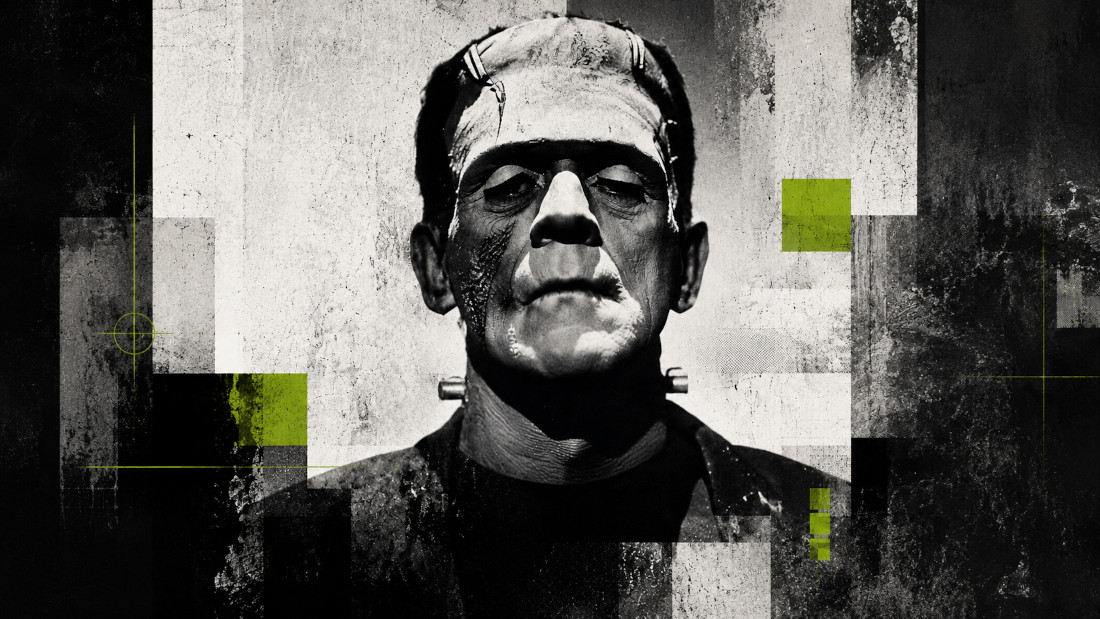
There is a scene in Frankenstein that almost nobody remembers accurately. It is not the lightning strike, nor the laboratory crowded with instruments. It is the precise moment when the creature opens its eyes and Victor flees. He does not flee because something went wrong. He flees because everything worked exactly as planned. The experiment succeeded, and it was that very technical success that horrified him.
Mary Shelley published the novel in 1818 and, perhaps without intending to, articulated the deepest design problem in the history of technology: what happens when the capacity to create far exceeds the willingness to take responsibility for what has been created.
The usual comparison with artificial intelligence invokes the image of the creature out of control, a power unleashed beyond our ability to contain it. But that is not the core of the tragedy. The creature is not adrift because of its power; it is adrift because Victor never considered what would happen once it came to life. There was enormous technical ambition, followed by a void.
Today's autonomous AI agents follow much the same sequence. They are designed to achieve objectives, released into the world, and only afterward does the debate begin over what ethical boundaries they should have. Regulation arrives running behind a tool that is already operating.
Yet there is a structural difference that makes the comparison even more unsettling than the analogy itself.
Shelley's creature wants something. It longs to be recognized, understood, loved. It possesses an inner life that the reader can follow, transforming the story into a moral tragedy. AI agents, by contrast, want nothing. They have no moral values, only parameters and objectives. What appears to make them simpler actually makes them harder to interrogate.
A biological creature can appeal to a shared ethical framework. An algorithm does not generate false information out of despair; it simply optimizes a process. Without interiority, there is no appeal.
The real risk is that this difference may provide us with a false sense of comfort.
Shelley also anticipated the problem of algorithmic opacity through a narrative device. The novel is structured in three layers—Walton, Victor, and the Creature—because no narrator possesses the complete picture. Each sees only a fragment of the system.
Today, even developers do not always understand why an AI agent arrived at a particular decision, especially in critical situations. The nested structure Shelley used to create literary tension describes, with unsettling accuracy, how decision-making operates inside modern AI systems.
What is often lost in this debate is that the creature was never the problem. The problem was that Victor never asked himself, before beginning his work, what kind of world he was creating for the thing he intended to awaken. He took responsibility for the technical outcome, but not for the context. And when the creation exceeded his expectations, he did not know what to do with it.
Neither do we.
The question Shelley left open two hundred years ago was not whether we could create something powerful and autonomous. It was whether we were willing to bear the weight of what that creation would imply before the machine began to walk.
Victor Frankenstein did not fail because he lacked talent. He fell because he lacked responsibility.
Two hundred years later, the same scene is playing out again on our servers. We have better technology, but we are still carrying the same underlying deficit.