Mobility, Not Speed
The small electric machines that could make ordinary distance reachable again
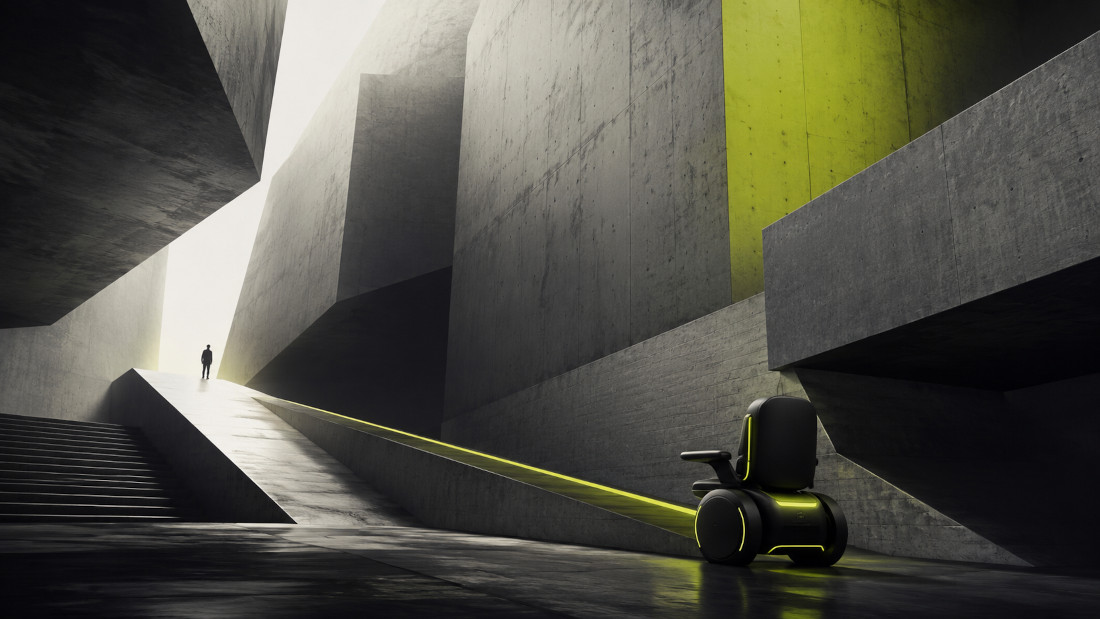
Yesterday, I saw two women moving slowly through the city. Both used canes. Both were assisted by someone nearby. Their movement was not only slow in the ordinary sense. It was almost architectural: a few meters became a project, a crossing, a negotiation with gravity, balance, pain, pavement, time.
Four meters took close to a minute.
There was nothing exceptional about the scene. That was precisely the point. The city is full of people for whom distance has changed scale. The door, the sidewalk, the pharmacy, the bus stop, the supermarket aisle, the short walk home — all of these can become long distances when the body no longer moves with the ease that the city silently assumes.
A few blocks away, the same city is full of small electric machines.
Scooters pass in bike lanes. Delivery bikes climb curbs. Compact motors move people, packages and food with a lightness that would have seemed exotic not long ago. The electric drivetrain has become ordinary: cheap motors, compact batteries, controllers, brakes, lights, sensors, folding frames. A whole urban grammar has grown around assisted movement.
But the most obvious question remains strangely quiet: if small electric machines are now everywhere, why are they not helping more people who need help moving slowly?
This is not a criticism of the scooter. The scooter solved a real problem for a certain kind of urban user: the person who wants to move faster, farther, with less effort. But there is another user, almost the inverse of that image. Someone who does not need speed. Someone who may not need a full wheelchair. Someone who can stand, walk a little, transfer, decide, participate — but not comfortably cover the small distances on which ordinary life depends.
Between the cane and the wheelchair there is a large human territory.
That territory deserves better machines.
Assistive mobility already exists, of course. There are powered wheelchairs, mobility scooters, walkers, rollators, stair lifts, orthotic devices and complex rehabilitation systems. Many of them are excellent. Many are designed with serious safety requirements in mind. But they often belong to a medicalized world: prescriptions, reimbursements, specialized distributors, high prices, heavy devices, stigma, waiting periods, and product categories that can feel more clinical than civic.
Meanwhile, consumer micromobility has moved in the opposite direction: mass production, lower prices, better batteries, lighter frames, better industrial design, direct distribution, fast iteration. It is not that a commuter scooter can simply become a device for an older person with mobility impairment. It cannot. Stability, braking, posture, fall risk, turning radius, sidewalk behavior, visibility and emergency stopping are completely different design problems.
But the component base is no longer exotic.
That changes the question. The challenge is not whether the machine can be built. The challenge is whether it can be built as the right kind of machine: slow, stable, affordable, dignified and legally welcome.
The word “slow” matters. Most urban machines are sold through speed. This one would be sold through confidence. It should not compete with bicycles, scooters or cars. It should not belong in the fantasy of acceleration. It should belong to the sidewalk, the plaza, the church entrance, the grocery store, the clinic, the hallway, the domestic threshold.
A useful assistive machine for this space would probably be capped at walking speed. It would need excellent brakes, lights, reflectors, a low center of gravity, safe turning behavior, simple controls, weather tolerance, a seat or partial-support option, and a form that does not make the user feel as if they have entered a hospital before leaving home. It should be repairable. It should be insurable. It should be boringly safe.
The legal side may be as important as the engineering. Cities already distinguish between pedestrians, bicycles, scooters, motorcycles and cars. They could also define a clear low-speed assistive mobility category: devices permitted on sidewalks and pedestrian areas, limited by speed, weight and width, with basic safety requirements and clear rules of use. The point would not be deregulation. The point would be legibility.
A good legal category can create a market. A bad one can suffocate it.
If a device is treated like a car, it becomes absurd. If it is treated like a toy, it becomes dangerous. If it is treated only as a medical device, it may become expensive, bureaucratic and socially marked. But if it is treated as civic assistive technology — a small machine that allows a person to remain present in public life — then the design space opens.
This is where the opportunity lies. The same technological abundance that made scooters visible could make assistance ordinary. Not spectacular assistance. Not robotic miracles. Not exoskeleton theater. Just the return of everyday distance.
The future of mobility is usually imagined as faster: autonomous cars, air taxis, delivery drones, high-speed urban systems. But there is another future, quieter and more necessary. A future in which the machine does not replace the body or outrun the city. It walks beside someone who needs the city to become reachable again.
Progress is not always speed.
Sometimes progress is four meters becoming possible.