Re.parar (Re.pair)
Technology repairs systems so they can work again; life reminds us that some systems, once they have changed, need more than repair: care.
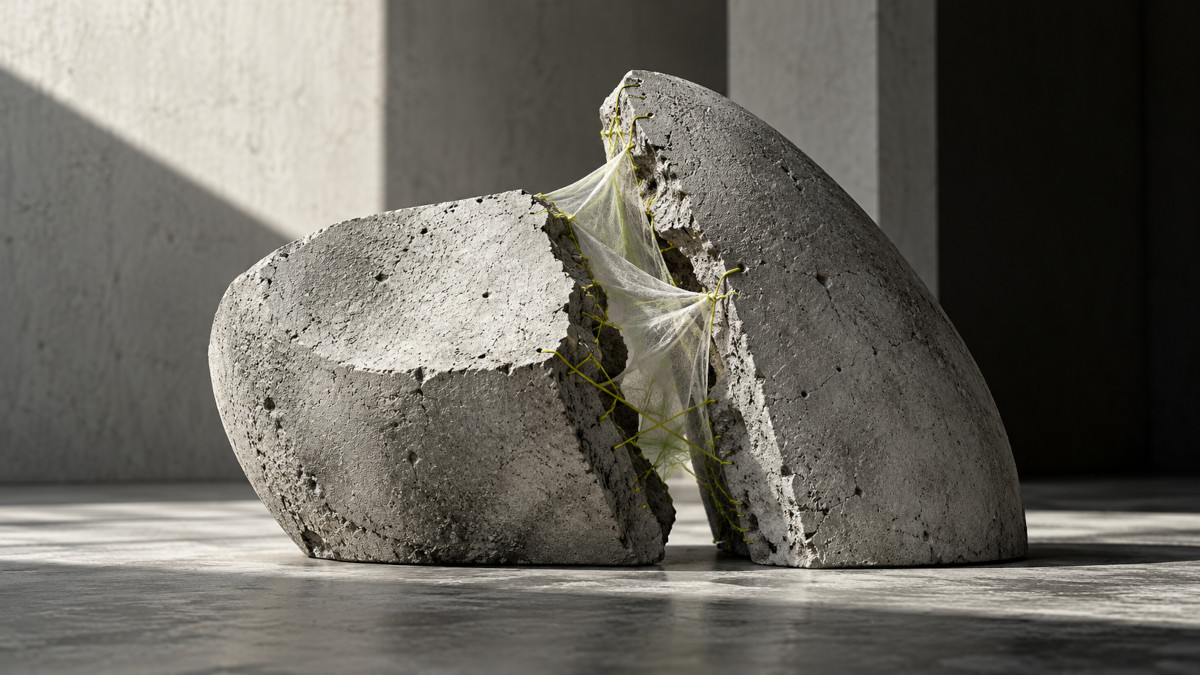
I used to fear it. The word that names it, the uncertainty it brings, that feeling that something familiar could change from one moment to the next. Over time, I began to discover that there is another way to approach fragility: without rushing to resolve it, without looking away. Staying for a moment. Listening. Accepting that not everything needs an immediate answer.
I arrive at Palacio Libertad (Buenos Aires, Argentina) and enter Re.parar, the group exhibition curated by Mariela Yeregui. I intend to move through it slowly. Not to look for meaning straight away, or try to understand everything. I stop in front of each work. I let what is happening reach me.
The exhibition brings together video installations, textiles and contemporary sculptures by seventeen artists. Their meeting point is care, understood not only as an action directed toward another person, but as a way of being in the world. Repair can mean putting something broken back together, but also tending to what is deteriorating, supporting what seems about to fall, or recognizing that something needs time.
In the gallery, that idea takes very different forms.
I approach Archivo Lácteo, by Ana Laura Cantera. Created in 2026, the work is an object woven from organic threads extruded from breast milk and algae derivatives. Something invites me to look closely at the piece’s materiality: what we usually associate with nourishment, intimacy and the beginning of life appears transformed into a weave. Biological material becomes material for art. What nourishes can also acquire another form, another presence, another duration.
I think about everything the body produces and how many vital processes unfold without our noticing them. Sometimes we need something to change scale before we can look at it again.
I continue toward Prácticas de reposición, by Gabriela Larrañaga, an installation that brings together remnants of soap, plant waste and hair. These are materials that could go unnoticed, connected with everyday use and cleaning, intimate and ordinary materials, almost invisible.
I find myself thinking about replenishment. About what is lost and what can be brought together again. About the small gestures we repeat without giving them much importance: washing, tidying, caring, discarding and starting again. There is a particular serenity in observing those remnants without rushing to hide them.
Further on, Cómo habitar un cuerpo agotado, by Francesca Cantore, introduces another presence. The electromechanical sculpture, made in 2026, turns the question toward the body and its limits. The title stays with me as I observe the piece. How do we inhabit a body when it no longer responds as we expect? How do we continue to inhabit a body when its energy, responsiveness or endurance seem exhausted?
I find no definitive answer. And perhaps finding one is unnecessary. The work allows us to pause with an experience that is often pushed aside when everyday life demands that we keep going.
In Del colapso al origen (el duelo), by Mene Savasta Alsina, a sound and light installation opens another register. Grief has its own rhythms, its interruptions and its returns. Light and sound create a space that does not need to explain what is happening. A place to remember, listen and work through loss.
I also stop in front of Mar Adentro, trilogía, by Analía Segal, a high-definition video animation from the Inner Compass series, made between 2020 and 2022. The moving image invites us to immerse ourselves in our own inner world to find refuge and reconnect. Sometimes migration takes us inward.
El día de Karina (La ilusión), by Matilde Marín, is part of the Bricolage Contemporáneo series. In the video performance (2002–2003), bubbles of illusion float above a city with all its contrasts, an undefined space and time in which discovery and surprise survive. And in Nilda Rosemberg’s textile works from the Trapos como banderas series (2021), basting, hand embroidery and seams make the work of joining visible. A seam does not necessarily conceal a separation: it can leave it visible and still hold the piece together. It is a deeply human gesture. It is not always about returning things to their previous state. Sometimes repair means finding a different way to continue.
Re.parar is not an exhibition exclusively about what is broken. Some of its questions may resonate with those who have experienced a loss, an absence, a diagnosis or a period of vulnerability. Even so, its territory is broader: caring for bodies, relationships, materials and whatever needs attention in order to endure. In its curator’s words, “a conscious decision to sustain what tends to be pushed aside.”
I leave with a simple idea: repairing does not always mean fixing. Sometimes it means paying attention, being there, sustaining a connection or allowing something to find its new form. Even when we do not quite know what to do.
It is not about fleeing fragility, but learning to inhabit it with care.
Re.parar
Curated by Mariela Yeregui
Palacio Libertad, Sarmiento 151, Buenos Aires, Argentina
Through April 11, 2027
Free admission.