Tell AI When to Stop
A good instruction explains what to do. A better one also defines when not to proceed.
Most instructions given to AI begin with an action: write, summarize, compare, calculate, recommend.
Far fewer explain what should happen when the information needed to complete that action is missing.
AI systems are designed to produce an answer. When faced with an incomplete brief, they will often bridge the gaps with inferences. Sometimes that is useful. Sometimes it produces a confident answer built on an assumption the user never approved.
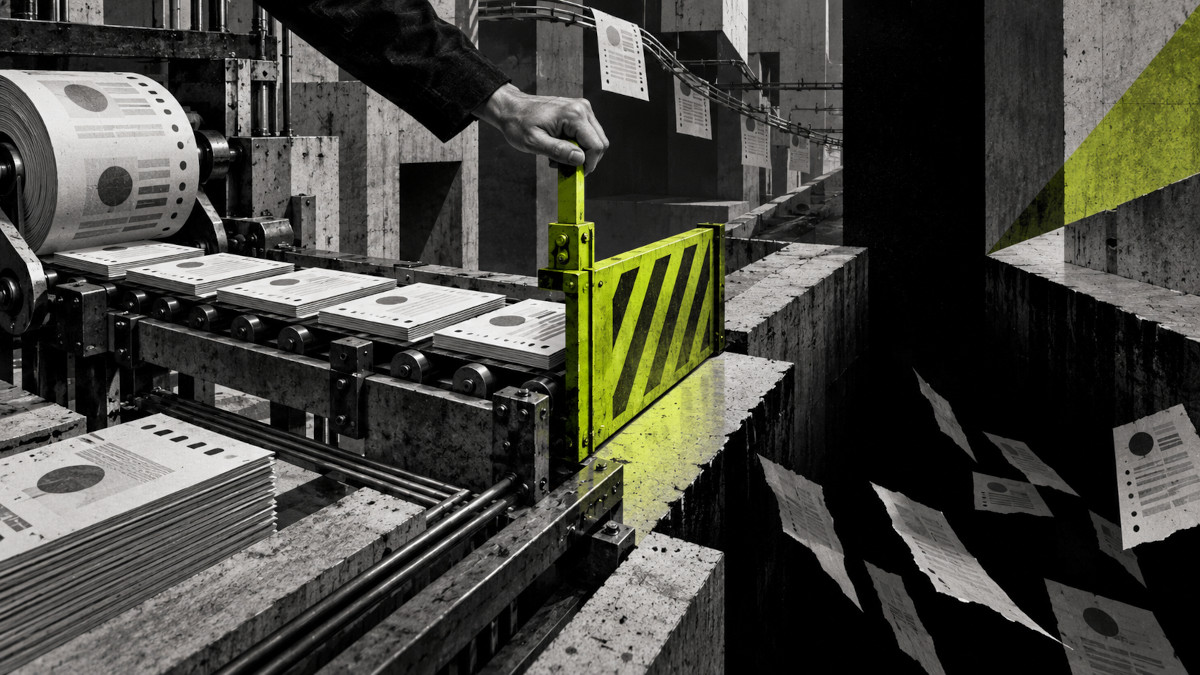
The practical solution is simple: add a stop rule.
If any required fact is missing, ambiguous, or cannot be verified, do not guess. Stop and tell me exactly what you need.
This sentence changes the working agreement. Instead of treating uncertainty as an obstacle to conceal, the AI must turn it into something visible.
The rule is particularly valuable when preparing client communications, modifying code or data, reviewing contracts, publishing factual material, or recommending an action with financial consequences. In those situations, a plausible invention can be more dangerous than an obvious error.
A stop rule does not make AI infallible. It creates a checkpoint at the precise moment when usefulness could become fabrication.
We spend a great deal of time teaching machines how to continue. Good delegation also requires teaching them when continuation would be irresponsible.
Intelligence is not only the ability to produce the next answer.
It is also the ability to recognize when the next answer should wait.