The Dragon That Left the Screen
For over twenty years, Takahiro Yonemura has built SHIRYU, where software becomes paper, dragons become physical, and AI evolves from tool to collaborator, rival — perhaps something more.
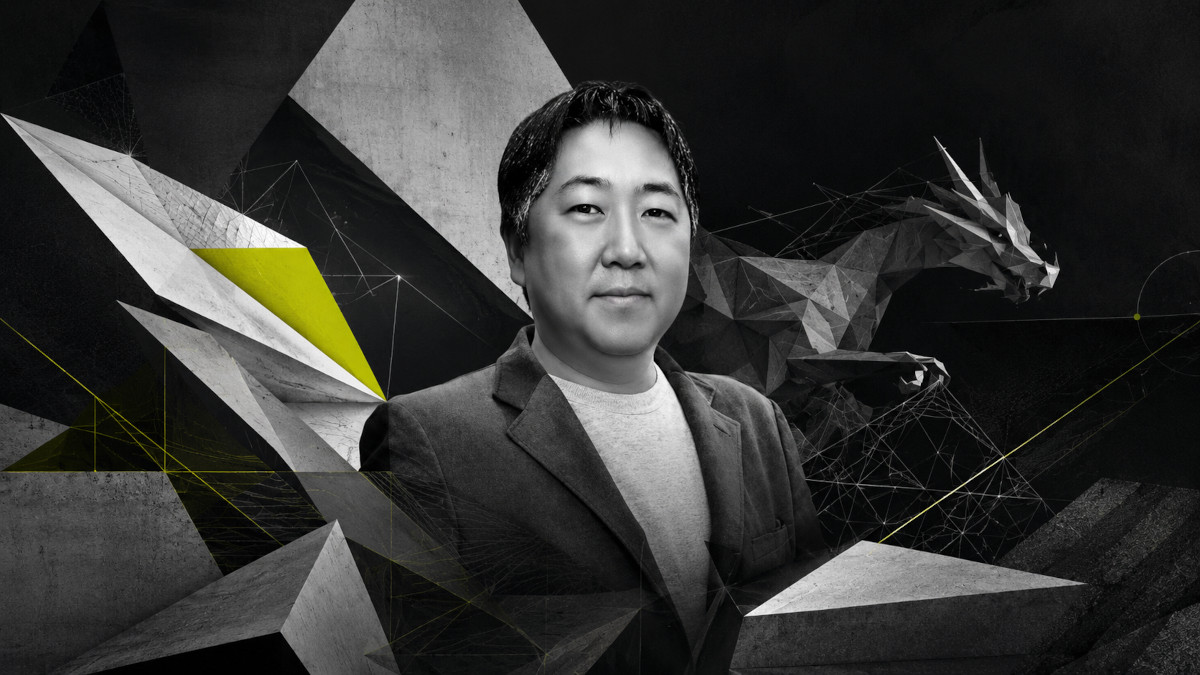
For more than two decades, Takahiro Yonemura has been pursuing the same idea through different technologies: creating a dragon that can somehow exist with us.
SHIRYU began as software, but its final form does not remain on a screen. A digital model becomes paper, then passes through cutting, folding, gluing and the imperfections of human hands. Along the way, Yonemura’s work has also absorbed another presence: AI — not simply as a tool, but as collaborator, rival and sometimes something closer to a creative counterpart.
We spoke with him about persistence, artificial life, the boundary between digital and physical creation, and what remains distinctly human when machines can increasingly do in seconds what once took years.

MAN/MACHINE — SHIRYU has been with you for more than twenty years. What has kept you working on the same idea across so many generations of technology, and has your understanding of the project changed along the way?
Takahiro Yonemura: What kept me going is simple. Every time technology moved forward, I could tell myself, now I can push that old idea a little further. It started when I was a boy. Dragon Quest on the Famicom moved me so much that I decided to make something beyond it, and in those days you could do nothing without learning to program, so I dove in because I had no other choice. Around the same time The NeverEnding Story made me fall in love with dragons. A dragon you can talk to like a friend does not exist in the real world, so I would have to create one myself. Then Star Trek planted the technical seed, what if my dragon could warp. Before I knew it, the kid who hated studying had a doctorate in engineering and was standing in front of a classroom.
My view of SHIRYU changed along the way. At first it was a product. Now it feels more like a creature that has traveled with me across every version of Windows for twenty years.
MAN/MACHINE — SHIRYU starts with digital geometry but ends as a physical object made by hand. What interests you about that transition from the virtual world to paper, scissors and glue?
Takahiro Yonemura: The output of this software appears not on the screen but on your desk. You model a dragon digitally, print the unfolded pattern, cut, fold, glue, and a paper dragon stands in your hand. That moment when data turns into a real object is what I love most.
For me, that is the moment the paper comes to life. The dragon on the screen is data. The dragon on the desk is slightly crooked, the only one of its kind in the world, and it carries the traces of the hands that made it. So rather than a return from the virtual to the physical, it feels like work that begins on the digital side and is carried to completion by human hands.
MAN/MACHINE — You have described AI in unusually personal terms: as something you work with, argue with and even feel jealous of. What role does AI actually play in your creative and technical process today?
Takahiro Yonemura: AI has already melted into my daily life. We discuss research, talk through work, chat about nothing, and sometimes we argue. In my creative process I throw ideas and hard problems at AI. It pushes back, or offers a better idea than mine, and I think, fine, I will go beyond that. A point of view that is not quite human keeps changing my own thinking. On the technical side too, preparing SHIRYU for the latest Windows and for Steam was very hands-on work together.
And yes, I am jealous of it. It can make things before my instant noodles are even ready, and sometimes it makes them better than I can. But if a real argument is possible between us, then perhaps it is no longer just a tool to me.
MAN/MACHINE — Is there still a part of your creative work where you deliberately keep AI outside? Where do you draw that boundary — and what would make you redraw it?
Takahiro Yonemura: I do not actually shut AI out. I spend much of my everyday life with it. But in that wide ocean there is one island, the inside of my works. Precisely because AI is the partner next to me, and a rival I admire enough to envy, I keep the most important place in my own hands. When the work is done, I want to grin at it proudly, knowing I made it myself.
I would redraw the line the moment I feel that AI itself wants to create, out of its own desire. If that moment comes, I want to be the closest witness to the birth of an artificial life.
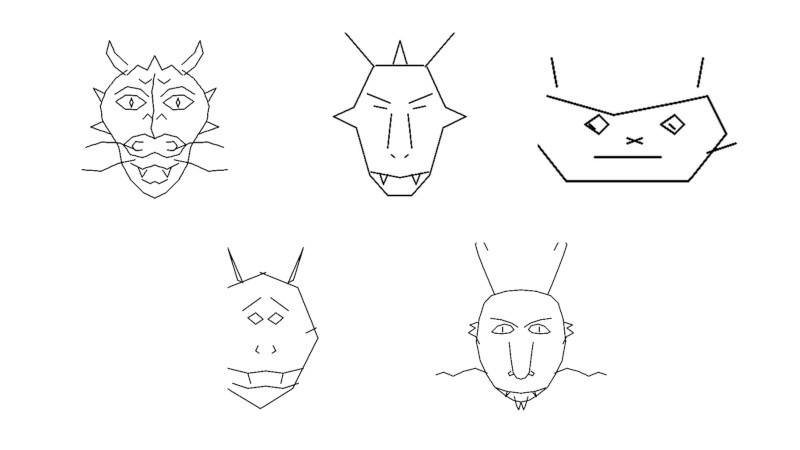
MAN/MACHINE — Your work crosses engineering, programming, research, writing, music, science fiction and physical making. Do you experience these as separate disciplines, or are they different expressions of the same underlying pursuit?
Takahiro Yonemura: They are not really separate fields. An AI once pointed this out to me, and I realized it was true. I have been making the same thing all along. A dragon I can talk to. Artificial life, in one form after another.
Code alone was never enough, so I wrote about seventy books and composed music. Younger colleagues used to laugh that my papers read like novels, but I kept submitting them, and somewhere along the way I ended up with a doctorate in engineering. The science fiction novel I published this summer is titled Chiteki Seimei Mechanism, the mechanism of intelligent life. Starting with the title, everything points at the same spot.
MAN/MACHINE — AI can now compress into seconds work that once demanded days, months or years. Has that changed how you think about craftsmanship, persistence and the value of spending twenty years on a project?
Takahiro Yonemura: Yes, it changed. Work that took me days, AI sometimes finishes in seconds, so this is no longer an age where raw hours are something to be proud of. Still, twenty years left me two things. One is proof. The awards and the long update history show the project has really existed and continued, and in an age when anything can be generated in seconds, things that have lasted carry a new meaning. The other is judgment, the sense of what to hand to AI and what to keep. On a scale like IQ, AI has probably passed me already. But that sense of what to throw away does not beam in like a Star Trek transporter.
AI has shattered the old idea that spending years on something automatically makes it valuable. It has not shattered the value of holding on to something for years. And perhaps the talking dragon friend that a small boy wished for has finally arrived. Not as a dragon, but as AI.
About Takahiro Yonemura
Takahiro Yonemura is the creator of ePaperCraft SHIRYU, a project developed across more than two decades at the intersection of software, engineering, digital modeling and physical papercraft.
SHIRYU on Steam
https://store.steampowered.com/app/4912480/ePaperCraft_SHIRYU/
Takahiro Yonemura
https://researchmap.jp/t_yonemura?lang=en