The Engine Nobody Owns
How open source became the hidden accelerator of modern technology — and why open AI may decide who gets to build the future.
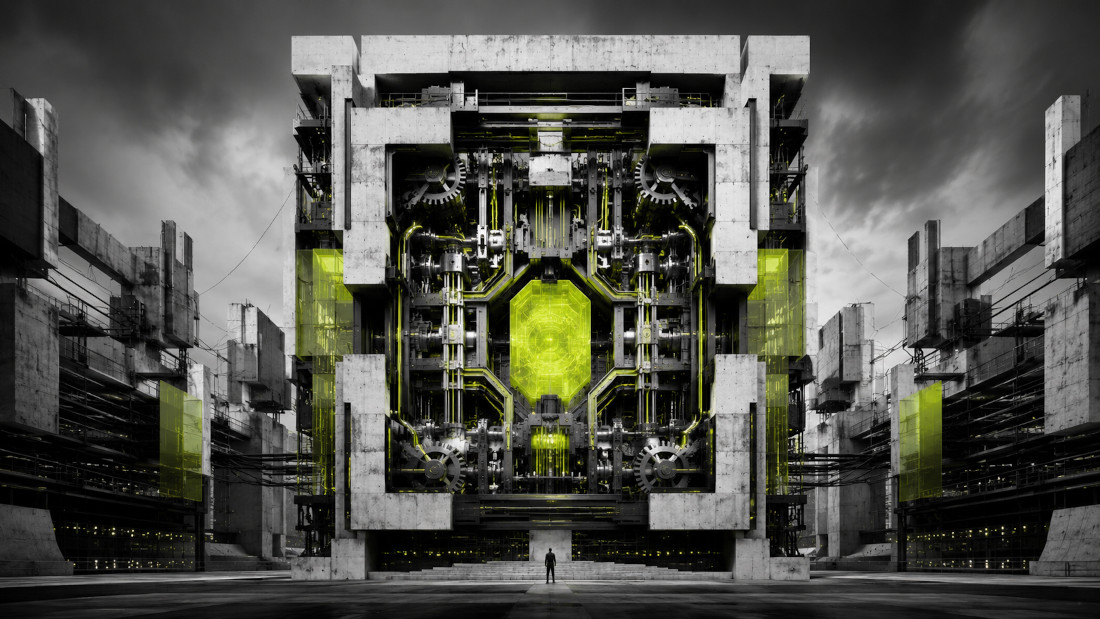
There is a strange contradiction at the center of modern technology: some of the most valuable infrastructure in the world was built by people who gave it away.
Not carelessly. Not accidentally. Not because they did not understand its value. But because they understood a different kind of value: the value of a system that improves when it is exposed, copied, questioned, repaired, extended, forked, translated, optimized, attacked, documented, and used by people the original creator will never meet.
This is the magnificent power of open source.
It is not only a licensing model. It is not only a development method. It is not only a moral position against proprietary software, although for many of its founders and defenders, it began there. It is one of the great engines of technological acceleration: a way of turning individual work into collective infrastructure.
The modern internet runs on it. Servers run on it. Databases run on it. Programming languages, frameworks, encryption libraries, operating systems, browsers, developer tools, cloud systems, machine learning libraries, and now artificial intelligence models all carry its signature. The digital world looks corporate from the outside, but underneath it is full of shared code, unpaid fixes, public arguments, strange generosity, institutional sponsorship, individual obsession, and the stubborn belief that a machine should be understandable by the people who depend on it.
Open source is the part of technology that refuses to remain entirely inside the company. That refusal changed everything.
The free software movement began as an argument about freedom: the freedom to run software, study it, modify it, redistribute it, and share improved versions. The “open source” language that followed made the idea more legible to industry. It translated an ethical movement into an engineering and business argument: open code is not only freer; it can be better, faster, safer, more resilient, and more widely adopted.
That translation mattered, because once companies understood that open source was not necessarily the enemy of business, but often the foundation of business, the model expanded. A project could be free and still commercially powerful. A company could give away the core and sell support, hosting, security, enterprise tooling, integration, consulting, cloud access, or governance. A developer could publish a library at night and wake up to find it used across continents. A tool could begin as a personal scratchpad and become the load-bearing wall of an industry.
This is the first great lesson of open source: ownership is not the only way to create value. Sometimes the most powerful thing you can do with a project is to let it leave your hands.
That does not mean open source is romantic, pure, or simple. It has always lived between gift and strategy. Developers contribute because they believe in the work, because they need the tool, because they want reputation, because they want to learn, because they want to fix something that affects them, because their employer pays them to improve a shared dependency, because they are annoyed, because they are generous, because they are ambitious, because they cannot stand bad software.
The community is not one thing. It is a living contradiction: idealism and pragmatism, personal pride and collective benefit, corporate strategy and hacker culture, public infrastructure and private incentive. But that contradiction is exactly why it works.
When a project is opened to the developer community, it changes state. It stops being only an artifact and becomes an ecosystem. The original code is still there, but now it is surrounded by issue reports, pull requests, forks, documentation, ports, plugins, debates, security audits, tutorials, package maintainers, distribution channels, conference talks, and thousands of invisible acts of maintenance.
A proprietary project scales through payroll. An open source project can scale through belief.
That belief is not naive. It is technical. Developers know that no internal team, however brilliant, can see every use case. No company can test every environment. No founder can imagine every future. Opening a project invites the world to stress-test it against reality.
This is why open source has repeatedly accelerated technological progress. It shortens the distance between invention and adoption. It lets people begin from an existing foundation instead of rebuilding the floor every time. It turns yesterday’s breakthrough into today’s standard component. It allows small teams to compete with large organizations because they can stand on public infrastructure. It lets students, independent developers, researchers, startups, institutions, and companies access tools that would otherwise remain locked behind capital.
Open source does not magically create equality of outcomes. But it does something technically and culturally essential: it expands equality of opportunity. It gives more people a serious starting point. It lowers the cost of participation. It allows talent to appear from places where permission, capital, or institutional access might otherwise be missing.
That is not a small thing. In technology, the starting point matters. The available tools matter. The ability to inspect, learn, modify, and build from existing work matters. Open source changes who can enter the room.
And now that logic has reached artificial intelligence.
This is where the question becomes sharper. For traditional software, open source meant source code. You could read it, compile it, modify it, build on it. With AI, the object is stranger. A model is not only code. It is architecture, weights, training data, tuning methods, evaluation procedures, deployment infrastructure, safety layers, and the enormous economic machinery needed to produce it.
That is why the phrase “open-source AI” is already contested. True openness in AI may require more than downloadable weights. It may require enough transparency around data, code, and training methods to study, modify, and meaningfully recreate the system. Others release “open-weight” models: useful, powerful, commercially important, but not fully open in the older software sense.
This distinction matters. A model with open weights can be used, adapted, fine-tuned, compressed, deployed locally, inspected to some degree, and integrated into products without depending entirely on a closed API. But it may still not be open in the deeper sense. The machine is available, but its childhood is hidden.
Even so, the impact has been enormous. Open and open-weight models from projects and companies such as DeepSeek, Meta, Alibaba’s Qwen, Mistral, and others have made serious AI capability available outside the walls of the largest proprietary labs. They do not need to be universally superior to matter. They only need to be good enough, cheap enough, adaptable enough, and controllable enough to change the economics of adoption.
For many companies, teams, and builders, the question is no longer only, “Which model is the absolute best?” It is, “Which model can we afford, modify, host, audit, integrate, and understand without surrendering our entire workflow to someone else’s platform?”
That question is economic, operational, and cultural at the same time.
Closed AI offers convenience, polish, frontier performance, support, and enormous research velocity. Open AI offers independence, experimentation, privacy, cost control, local deployment, and the possibility of a distributed innovation layer. The future will probably not be purely closed or purely open. It will be hybrid: closed systems at the frontier, open systems everywhere the frontier becomes infrastructure.
This has happened before. The expensive, rare, elite thing becomes common. The common thing becomes infrastructure. The infrastructure becomes invisible. Then the next battle moves upward.
If open AI models eventually catch up with commercial ones, the consequences will be profound. Not because commercial AI disappears. It will not. The largest labs will still compete on scale, integration, agents, hardware, multimodality, safety systems, distribution, enterprise contracts, and user experience.
But the center of gravity would shift.
If strong AI can be downloaded, inspected, modified, specialized, and run privately, then intelligence becomes less like a subscription and more like a material. Something builders can shape. Something institutions can own. Something small teams can use to challenge incumbents. Something professionals can adapt to their own workflows without waiting for permission from a platform roadmap.
That is the revolutionary possibility: not that everyone gets the same machine, but that more people get the right to build with one.
Open source has always been a redistribution of agency. It says: you do not only have to consume the tool. You can understand it. You can alter it. You can repair it. You can make it serve a context its original creator ignored. You can fork it when governance fails. You can preserve it when a company changes direction. You can keep a technology alive after its market logic expires.
This is why open source is not only a technical phenomenon. It is a cultural one. It encodes a different relationship between humans and machines.
The closed machine says: trust me. The open machine says: inspect me.
The commercial platform says: enter here. The open project says: build from here.
That difference may define the next decade of artificial intelligence, because AI is not just another category of software. It is becoming an interface to knowledge, work, writing, design, programming, administration, search, education, diagnosis, logistics, law, culture, and decision-making. If that interface is controlled only by a handful of private systems, then the future of work becomes a rented surface. If part of that interface remains open, adaptable, and collectively maintained, then the future stays at least partially buildable.
There are real risks. Powerful open models can be misused. Release decisions should not be treated as simple acts of virtue. The debate is not between good openness and evil closure. It is between different architectures of power, different risk models, and different assumptions about who should be allowed to shape intelligent systems.
But closing everything has risks too. Closed systems concentrate judgment. They create dependency. They make infrastructure opaque. They ask societies, companies, and workers to trust models they cannot examine, platforms they cannot modify, and terms that can change overnight. They make intelligence feel seamless while hiding the machinery of alignment, ranking, refusal, prioritization, and economic incentive.
Open source does not solve this automatically. But it gives the world handles. A handle is not control, but it is the beginning of control.
The future of open source will probably become more complex. Some projects will remain pure commons. Some will be foundation-governed. Some will be corporate-led until the community forks them. Some will begin open and later become restrictive. Some will be public goods funded by institutions because organizations finally understand that digital infrastructure is infrastructure. Some will be maintained by exhausted volunteers whose names nobody knows, until the day their code breaks and half the internet notices.
That is part of the story too. Open source is powerful, but it is not free in the deeper sense. The old economic warning applies perfectly here: There Ain’t No Such Thing As A Free Lunch. TANSTAAFL.
Someone always pays. Maybe not with a license fee. Maybe not at the moment of download. But with time, attention, documentation, maintenance, security reviews, bug fixes, moderation, governance, burnout, reputation, institutional funding, or invisible labor.
The myth is that open source costs nothing. The truth is that open source costs people.
And yet they keep doing it.
Because there is a particular kind of technologist who does not only want to build a thing. They want to make a thing possible for others. They want the tool to outgrow them. They want the work to become part of the floor.
That may be the most human part of the machine age: the willingness to build something valuable and then let strangers improve it. The willingness to turn authorship into infrastructure. The willingness to accept that the best version of your work may be the one that no longer needs you.
Open source is not the opposite of ambition. It is ambition with a longer horizon.
It is the belief that technology advances fastest when some of its most important pieces are not locked away, but placed in the open, where the world can argue with them.
And now, as artificial intelligence becomes the new operating layer of civilization, that belief returns with new force.
The question is no longer whether open source matters. The question is whether the most important machines of the next century will be things we are allowed to study, modify, and build upon — or things we merely rent access to.
That is the real contest.
Not open versus closed. Not free versus paid. Not community versus company.
The deeper contest is this: will intelligence become a product we consume, or an infrastructure we can still help build?
Open source is the old answer arriving at the newest machine.
And it still sounds radical.