The Judgment Bottleneck
Where AI Delegation Fails: companies are automating execution faster than they are redesigning judgment.
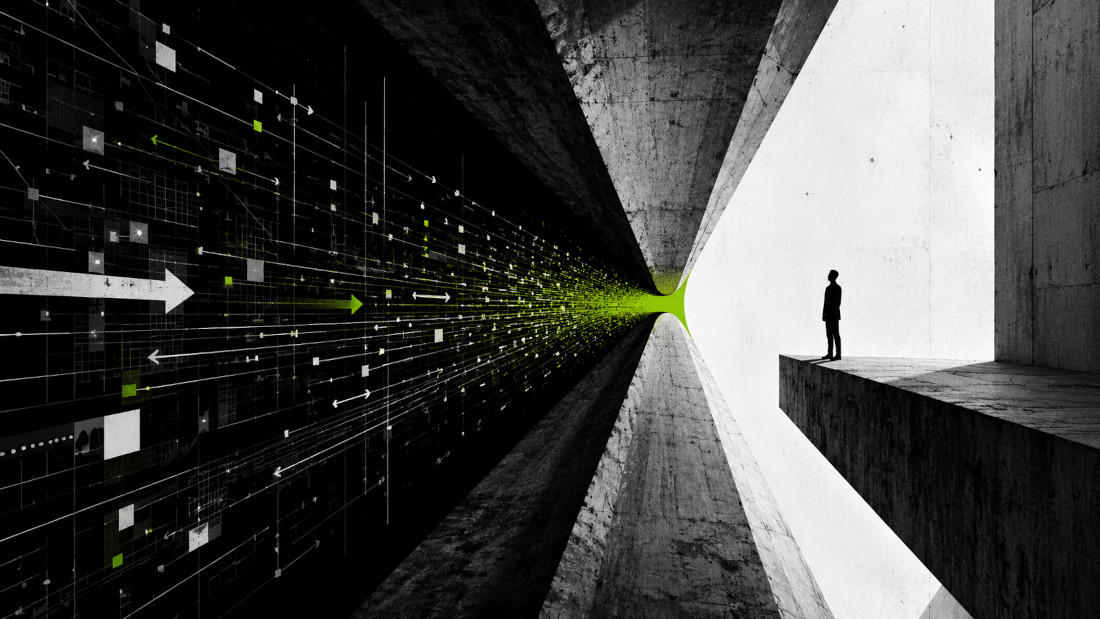
Companies are automating execution faster than they are redesigning judgment. Reports, summaries, drafts, and workflows now move at machine speed. But when a real decision lands — strategic, ambiguous, accountable — the system often routes it nowhere in particular. That is the judgment bottleneck: the point where AI can identify the failure, but cannot resolve it. The problem is not technical. It is organizational.
There is a specific organizational failure worth naming, and it doesn't show up in any automation ROI report.
Companies have spent the last two years doing the right thing: automating execution. Reports get drafted at machine speed. Data gets pulled, summarized, reformatted. First drafts appear before anyone has had their morning coffee. Throughput is up. Headcount looks efficient. The machinery hums.
And then a decision lands — a strategic hire, a client relationship under strain, a resource call with downstream consequences nobody modeled — and the system routes it nowhere in particular. It sits. It escalates to someone who wasn't expecting it. It gets resolved, eventually, by whoever had the bandwidth to take it, not by whoever had the judgment to make it.
This is the judgment bottleneck. And it is, right now, the central organizational challenge that most companies aren't actually working on.
The machine is good at finding it
Here is the useful irony: AI is genuinely well-suited to help identify where the bottleneck lives.
Pattern recognition across workflow data, anomaly detection in decision latency, surfacing the recurring moments where a process stalls or gets escalated unexpectedly — these are exactly the kinds of tasks that analytical AI tools handle well. A company that has deployed AI seriously across its operations can, in principle, use that same infrastructure to audit itself. To find the seams. To see where the system is routing questions it wasn't designed to answer.
What AI cannot do is solve the problem it finds. The bottleneck isn't a technical artifact. It's an organizational one. It exists because the company hasn't decided — explicitly, systematically — which decisions require a human, what kind of human, and under what conditions. Routing that question back to an AI agent doesn't resolve it. It delays it, at scale, with more confidence.
This matters because the instinct, when an AI diagnostic surfaces a friction point, is to fix it with more AI. A better model. A more sophisticated agentic workflow. Another layer of automation over the gap. Sometimes that's right. Often, it papers over the actual problem, which is that no one has defined what good judgment looks like in that moment, and therefore no system — human or machine — can reliably exercise it.
The strategy gap nobody wants to admit
Eighty-five percent of organizations say they are moving toward agentic AI. Seventy-six percent lack the infrastructure to support it. That gap is usually framed as a technology deficit. It isn't. It's a strategy deficit hiding behind a procurement conversation.
Agentic AI — systems that pursue goals across multiple steps, making intermediate decisions without human input at each turn — is a fundamentally different organizational commitment than automation. Automation replaces a task. Agency replaces a decision-maker, at least within a defined domain. The questions those two commitments require are not the same.
Automation asks: what tasks are slow, repetitive, or error-prone? Agency asks: which decisions can we define well enough that a system can make them responsibly without human review? The second question is harder. It requires knowing what you're actually deciding, what good looks like, what the failure modes are, and who is accountable when things go wrong. Most organizations haven't done that work. They've deployed the technology instead.
The companies moving toward agentic AI without answering those questions first are not moving faster. They're accumulating organizational debt. Decisions are being made at speed and scale by systems whose parameters haven't been examined, by goals that were defined for a task environment that has since shifted, by workflows that route exceptions — the hard cases, the edge cases, the actually important ones — back to humans who have no context for why the system passed it to them.
The rush to agentic is understandable. The technology is genuinely impressive and the competitive pressure is real. But strategy is not choosing which tools to buy. It's deciding what you're trying to do, and what you're not willing to let the machine decide alone. That prior question is not a technical one, and no amount of infrastructure resolves it.
The non-agentic insight
There's a category of organizational improvement that doesn't get discussed much right now, because it's not exciting and it doesn't involve a new model release. It involves thinking more carefully about human decision-making and being honest about where the actual problem lies.
Some judgment bottlenecks exist because the wrong person is making the decision — accountability has drifted from where authority used to live. Some exist because the decision criteria haven't been defined, so every instance gets escalated even when it shouldn't be. Some exist because the organization has layered automation over a process without ever clarifying what the human in that process was actually deciding.
In all of these cases, more AI makes the problem worse, not better. Faster throughput with diffuse accountability just means more decisions made badly, sooner. Clearer escalation paths, better-defined decision rights, more explicit accountability structures — these are organizational interventions, not technological ones. And they often unlock more value than the agentic workflow sitting on top of them would have, because they address the actual gap rather than automating around it.
This is not an argument against AI. It's an argument for sequencing. The organizations doing this well aren't asking "what can we automate?" first. They're asking: which decisions require someone who can be wrong and held responsible for being wrong? That question has an answer. Drawing the line is the actual work of organizational design right now — not the tool selection that gets most of the attention.
The line
What does it mean to keep a decision human? Not every judgment call requires a senior executive and a two-hour meeting. The point isn't that machines can't be fast and humans must be slow. It's that certain categories of decision require something that no current AI system can reliably supply: the capacity to recognize when the parameters themselves are wrong.
Agentic AI executes within defined parameters. It optimizes for stated goals. What it cannot do — at least not yet, and not reliably — is recognize when the situation has drifted from the scenario the parameters were designed for. The moment when the model should say "this case is different in a way that matters" and route the decision upward is itself a form of expertise. It requires understanding not just what the rules are, but why they exist and what they're trying to protect.
Most organizations haven't built that routing logic. They've built automation and called it intelligence. The bottleneck isn't where execution happens. It's where recognition happens — the moment when a system or a person understands that this instance is not the one the workflow was designed for.
Building that recognition into an organization is hard and unglamorous. It requires mapping decisions, assigning ownership, defining what an edge case looks like and what to do when you're in one. It requires resisting the pressure to automate past the ambiguity rather than through it.
But it's the actual problem. And until it's solved, the machinery will keep humming, and the decisions that most need judgment will keep landing nowhere in particular.