#AIMuseumsMW
Out Loud
From June 1 to 7, under the theme “Intelligences - Museums - Futures,” museums and cultural organizations are thinking out loud about the kind of world we want, and what role museums will play in building it.
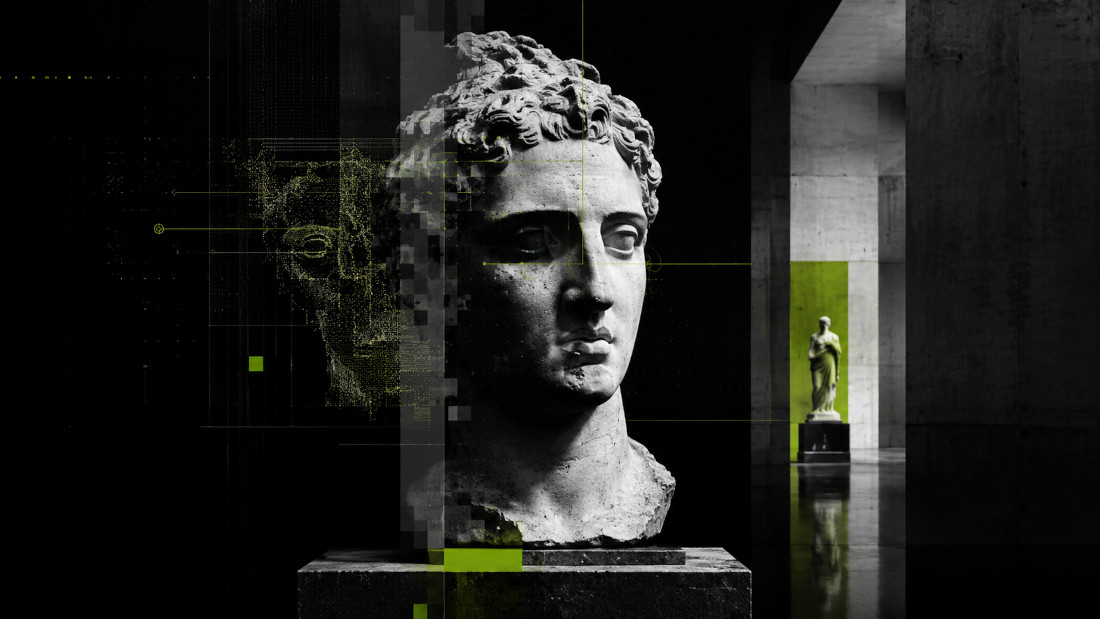
The way we consume art is changing. MuseumWeek, the major global movement supported by UNESCO that has connected thousands of institutions for more than a decade under the premise of “7 days, 7 themes, 7 hashtags,” makes one thing clear: it is no longer enough for museums to have an active social media presence or upload images to their platforms.
This new edition of MuseumWeek, promoted globally alongside ICOM and UNESCO, has chosen not to avoid one of the most uncomfortable conversations in contemporary culture: what happens when the algorithm begins to intervene in the way we see, catalogue, interpret, and even imagine art?
As meeting places, creators of meaning, and guardians of human sensitivity, museums are among the best candidates to ensure that AI is used according to ethical, inclusive criteria, with people at the center. Our digital society needs to be built together with institutions capable of giving it soul, context, and direction. And museums are uniquely equipped to do exactly that.
For seven days, hundreds of cultural institutions around the world activate a kind of choral conversation through hashtags as specific as #AIMuseumsMW and #AIFuturesMW. Centuries-old museums talking about prompts, archives trained with machine learning, digitized collections, curatorial avatars, and hybrid futures where physical and virtual experiences do not compete, but coexist.
The most interesting thing is not that museums are “using AI.” That has already been happening for years in conservation, cataloguing, and accessibility processes. What is truly new is the change in tone. AI has stopped appearing only as a dystopian threat and has become a cultural subject. A matter of heritage. A public debate.
The Algorithm vs. Matter
Can artificial intelligence restore art?
A key post during the week reminded us of the limits of the screen: digital tools are brilliant at simulating and projecting images, showing, for example, a photograph with ultra-defined colors and stains softened by software. But real conservation works with materiality.
The algorithm does not understand chemistry. It does not know the fragility of a support, nor the ethical principles of minimal intervention and reversibility. Exploring the possibilities of AI in museums also forces us to understand which tasks it can enhance, and which depend entirely on human judgment and sensitivity in front of the real object.
UNESCO also organized a series of webinars this week on museums and digital futures, addressing topics ranging from underwater heritage to virtual museums and preservation in technological environments.
The underlying question is no longer whether artificial intelligence is going to transform culture, because it clearly already has. The question is how we are building the narrative around that transformation.
While technology platforms accelerate, optimize, and automate everything, museums still preserve something radically human: slow time. The pause. Contemplation. Context. The ability to place an object in front of us and force us to think beyond the scroll.
The AI manifesto published by MuseumWeek argues that artificial intelligence should amplify human creativity, not replace it. Perhaps that is why many of the most interesting proposals in this initiative do not try to compete with technological spectacle, but to humanize it.
Some institutions are asking their communities which memories deserve to be preserved by future algorithms. Others imagine how artworks would “speak” if they could generate their own text under the hashtag #IfObjectsCouldSpeakMW. Some even play with artificially generated images to show alternative versions of their collections or speculate about what museums might look like one hundred years from now.
There is something revealing in this global experiment: a distributed cultural laboratory, a digital conversation among institutions that once seemed unable to move beyond the solemn language of the gallery wall, and that today invite us to explore, among humans, the non-human.
I have not come to replace you.
I have come to archive you.
I have no pulse and no emotional memory, but I can process, in a single second, every human attempt to defeat forgetting.
AI, out loud.