Too Many AIs
Every platform now wants to think with us. The question is whether we need an AI for every tool — or one intelligence that follows us between them.
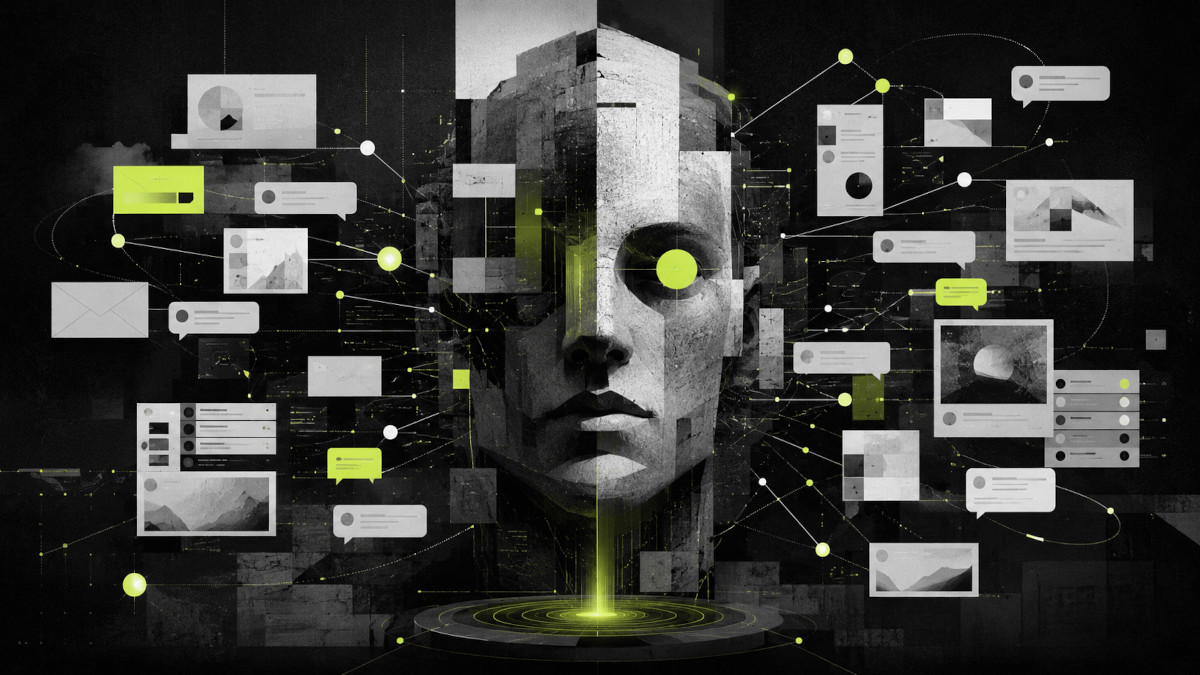
Artificial intelligence is no longer something we deliberately open. It is becoming part of the environment. WhatsApp has Meta AI, Facebook is increasingly shaped by AI-driven recommendation systems, LinkedIn has introduced AI assistance across different parts of the professional experience, Mailchimp and MailerLite can help generate and optimize campaign content, and Gemini sits inside Google Workspace, offering assistance while we write and work in Docs.
The pattern extends much further. Software that once waited for instructions is beginning to suggest, rewrite, summarize, predict and recommend. This creates an unusual problem: we may soon have more AI assistants than applications we can meaningfully manage, and they are not all doing the same job.
There is a strong argument for using the AI built into each platform. An AI inside an email marketing system understands that it is working on an email campaign. It knows the structure of the tool, the fields available, the constraints of the environment and, increasingly, the performance patterns associated with that type of communication. An AI inside a professional network understands that environment differently. An AI inside a document editor can work directly with the document instead of requiring us to move information somewhere else.
This is the attraction of embedded AI: the context is already there. The assistant is close to the object being manipulated. There is less friction, less copying and less explaining, and potentially better optimization. A specialized assistant can often understand details that a general-purpose system has to infer or be told explicitly. It may know formatting restrictions, platform conventions, available data, audience characteristics or technical requirements. For narrow tasks, specialization is powerful.
But specialization comes with a cost. Move from one application to another and the intelligence changes. The assistant helping with an email campaign may know nothing about a positioning decision made earlier in the day. The AI inside a social platform may not know why a particular tone was rejected the previous week. Another assistant may recommend a perfectly reasonable approach that contradicts a strategy already established somewhere else.
Each system sees a fragment. From its perspective, that fragment may be enough. From ours, it often is not. This is one of the paradoxes of AI abundance: the more intelligence we distribute throughout our tools, the more fragmented our working context can become. The platform knows what we are doing there, but it does not necessarily know what we are trying to achieve overall.
The alternative is to develop a primary relationship with one general-purpose AI system. Instead of allowing every application to become an independent source of advice, one assistant becomes a persistent cognitive layer above them. The applications remain tools, while the AI helps coordinate how they are used.
Over time, a primary assistant can accumulate working context: terminology, preferred tone, recurring projects, previous decisions, rejected ideas, technical constraints and habitual ways of approaching problems. The difference can be subtle but important. A platform-specific AI may know what normally performs well. A persistent AI may know why you do not want to do what normally performs well.
One is optimized around the task. The other can increasingly be optimized around the person.
That continuity can become more valuable than specialization, particularly when work crosses disciplines. A campaign may involve strategy, writing, design, analytics, social distribution and technical implementation. No single application sees the whole chain, while a general-purpose AI potentially can.
There is another distinction worth considering. An embedded assistant operates inside a product, and that product has objectives. A social network wants its network to function well. An email platform wants effective campaigns. A productivity suite wants people to accomplish more within its ecosystem. Those objectives may overlap strongly with ours, but they are not necessarily identical.
When a platform recommends an action, the useful question is not only whether the recommendation is intelligent, but what it is optimizing. More engagement, more clicks, better deliverability, more activity inside the platform or faster completion of the immediate task may all be desirable. But the user’s objective may be different. It may be consistency, restraint, long-term positioning, originality, or simply refusing to sound like everyone else who accepted the same optimization.
The closer AI becomes to the infrastructure, the more important this distinction becomes.
Fortunately, we do not need to choose completely between local intelligence and continuous intelligence. The more effective model may be orchestration: use a primary AI to maintain strategic continuity, use specialized AI where its platform knowledge provides a real advantage, and then evaluate those recommendations within the broader context.
An email platform might suggest subject-line variations. A primary AI can assess whether those suggestions fit the overall communication strategy. A platform assistant might identify an optimization opportunity. The central AI can help determine whether optimizing that metric actually serves the project. Neither system needs to replace the other because they operate at different layers.
The workflow begins to resemble the management of a small organization. The specialist understands the domain. The generalist understands the wider objective. The human remains responsible for deciding which recommendation matters.
For the first phase of generative AI, much of the discussion focused on prompting: how to ask better questions, describe the desired result and get the machine to understand us. Those skills still matter, but another one is becoming equally important: knowing which intelligence should solve which part of the problem.
Some tasks benefit from a specialist that knows the environment intimately. Others benefit from an assistant that remembers the larger objective. Some require both.
This may become one of the defining characteristics of mature AI use. Not maximum automation, and not maximum adoption, but coordination. The workplace of the near future may contain dozens of intelligent systems, many of them almost invisible. The advantage will not necessarily belong to the person who uses the greatest number of them, but to the person who understands what each one knows, what it does not know, what it is optimizing, and when another machine may be the better one to ask.
We spent the first years of generative AI learning how to talk to machines. The next skill may be learning which machine to talk to.